


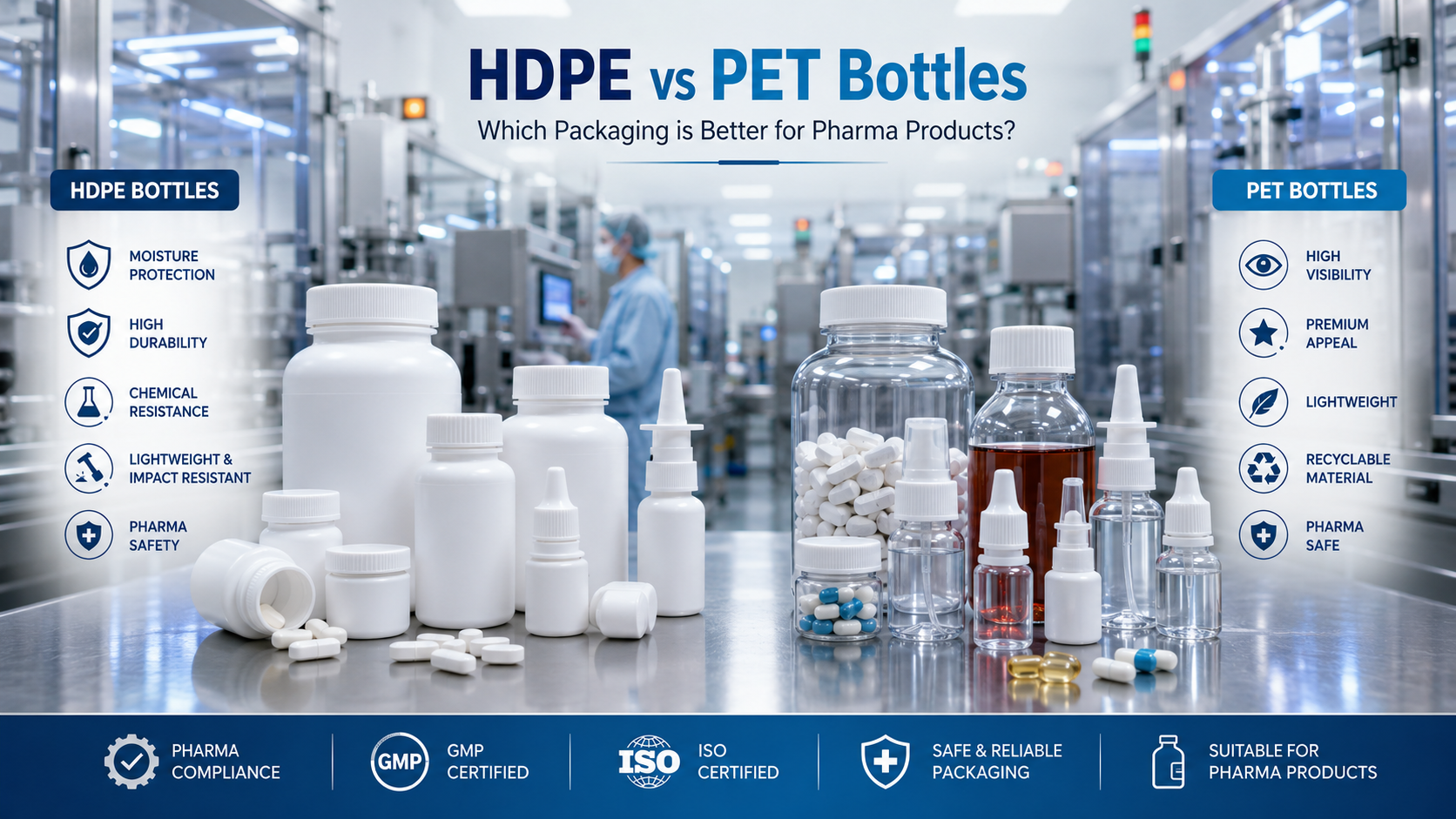
In the pharmaceutical industry, packaging is much more than just a container. It plays a critical role in product safety, shelf life, medicine stability, transportation, regulatory compliance, and consumer trust. Choosing the right packaging material can directly impact the effectiveness and quality of pharmaceutical products.
Among the most commonly used pharmaceutical packaging materials, HDPE and PET bottles are two leading options. Both materials are widely used for storing medicines, syrups, nutraceuticals, tablets, capsules, and healthcare products. However, each material has its own strengths, advantages, and ideal applications.
For pharmaceutical companies, selecting between HDPE and PET bottles depends on several factors such as moisture protection, chemical resistance, product visibility, durability, and branding requirements.
As a trusted pharmaceutical packaging manufacturer in India, Cimpex Packaging provides high-quality HDPE bottles, PP bottles, eye drop bottles, tablet containers, nasal spray bottles, caps, closures, and customized pharma packaging solutions designed to meet modern industry standards.
This article explains the major differences between HDPE and PET bottles and helps pharmaceutical businesses choose the right packaging solution for their products.
Understanding HDPE Bottles
HDPE stands for High-Density Polyethylene, a strong and durable plastic material commonly used in pharmaceutical packaging. HDPE bottles are widely preferred in the pharma industry because of their excellent chemical resistance, moisture protection, and long-term durability.
One of the biggest advantages of HDPE pharma bottles is their ability to protect medicines from external environmental conditions. Many pharmaceutical products are sensitive to moisture, heat, and light exposure. HDPE bottles help maintain product stability and extend shelf life.
HDPE bottles are usually opaque or semi-opaque, which provides additional protection against UV rays and sunlight. This makes them ideal for sensitive medicines and healthcare products.
Common Uses of HDPE Bottles in Pharma
- Tablet containers
- Capsule bottles
- Syrup bottles
- Chemical medicine containers
- Dry powder packaging
- Nutraceutical containers
- Sanitizer bottles
Key Benefits of HDPE Bottles
Excellent Moisture Resistance
HDPE bottles provide strong moisture barrier properties, making them highly suitable for tablets and capsules.
Strong Chemical Resistance
Many pharmaceutical formulations contain chemicals that require stable packaging. HDPE performs exceptionally well against chemical reactions.
Durability
HDPE bottles are impact-resistant and durable during storage and transportation.
Lightweight Packaging
Despite being strong, HDPE bottles remain lightweight, reducing logistics costs.
Better Product Protection
HDPE packaging helps preserve medicine quality and effectiveness over longer periods.
Because of these advantages, many pharmaceutical manufacturers prefer HDPE packaging for sensitive healthcare products.
Understanding PET Bottles
PET stands for Polyethylene Terephthalate, another widely used plastic material in pharmaceutical packaging. PET bottles are especially popular for liquid medicines, syrups, nutraceutical products, and wellness supplements.
One of the biggest advantages of PET pharma bottles is their transparency. PET bottles offer a crystal-clear appearance that allows consumers and healthcare professionals to see the product inside.
PET bottles also provide excellent design flexibility and premium shelf appeal, making them ideal for retail pharmaceutical and nutraceutical products.
Common Uses of PET Bottles
- Syrup bottles
- Vitamin containers
- Nutraceutical packaging
- Herbal medicine bottles
- Liquid pharmaceutical packaging
- Healthcare supplements
Key Benefits of PET Bottles
Transparency
PET bottles allow better product visibility, which improves customer trust and presentation.
Lightweight Material
PET bottles are lightweight and easy to transport.
Attractive Appearance
PET packaging gives products a premium and modern look.
Good Oxygen Barrier
PET helps protect products from oxygen exposure.
Recyclability
PET is widely recyclable and supports sustainable packaging practices.
PET packaging is commonly chosen for products where appearance and visibility are important.
HDPE vs PET Bottles – Key Differences
Choosing between HDPE and PET bottles depends on the pharmaceutical product being packaged. Here are the major differences between the two materials.
Durability
HDPE bottles are generally stronger and more impact-resistant than PET bottles. They can handle rough transportation and industrial storage conditions more effectively.
PET bottles are durable but can crack under high impact compared to HDPE.
Better Option:
HDPE Bottles
Chemical Resistance
HDPE has superior chemical resistance, making it ideal for medicines containing reactive ingredients.
PET bottles may not be suitable for certain aggressive chemical formulations.
Better Option:
HDPE Bottles
Moisture Protection
Moisture protection is extremely important for pharmaceutical products like tablets and capsules.
HDPE bottles provide excellent moisture resistance and help maintain medicine stability.
PET bottles offer moderate moisture protection but are generally less effective compared to HDPE.
Better Option:
HDPE Bottles
Transparency
PET bottles provide crystal-clear transparency, allowing consumers to view the product.
HDPE bottles are usually opaque or translucent.
Better Option:
PET Bottles
Shelf Life Protection
HDPE bottles help extend product shelf life because of their strong barrier properties.
PET bottles work well for many liquid medicines but may not offer the same moisture protection as HDPE.
Better Option:
HDPE Bottles
Cost Effectiveness
HDPE bottles are often more economical for bulk pharmaceutical packaging.
PET bottles can sometimes cost slightly more due to aesthetic and clarity advantages.
Better Option:
HDPE Bottles for bulk pharma use
Sustainability
Both HDPE and PET are recyclable materials. Modern pharmaceutical manufacturers increasingly prefer sustainable packaging solutions.
PET recycling systems are widely available globally, while HDPE is also highly recyclable and reusable.
Better Option:
Both materials support sustainability goals.
Transportation Efficiency
Both materials are lightweight, but HDPE bottles often perform better in demanding transport conditions because of their toughness.
Better Option:
HDPE Bottles
Customization Options
PET bottles offer excellent design flexibility and premium retail appeal.
HDPE bottles also support customization, including colors, shapes, caps, and branding.
Better Option:
Both materials depending on branding goals
Regulatory Compliance
Both HDPE and PET bottles can meet pharmaceutical-grade packaging standards when manufactured using high-quality materials and strict production controls.
Reliable manufacturers like Cimpex Packaging focus on quality testing, precision molding, and pharma-grade manufacturing practices to ensure safe pharmaceutical packaging solutions.
Which Bottle is Better for Different Pharma Products?
Different pharmaceutical products require different packaging solutions.
Tablets & Capsules
HDPE bottles are usually the preferred choice because they provide excellent moisture resistance and product protection.
Recommended:
HDPE Bottles
Syrups
PET bottles are commonly used for syrup packaging because of their transparency and attractive appearance.
Recommended:
PET Bottles
Nutraceutical Products
Both HDPE and PET are suitable depending on the product type and branding requirements.
Recommended:
HDPE or PET
Eye Drop Bottles
Specialized pharmaceutical-grade HDPE and PP materials are commonly used for eye drop packaging.
Recommended:
HDPE & PP Bottles
Sensitive Medicines
Medicines sensitive to moisture, heat, or chemicals require stronger protection.
Recommended:
HDPE Bottles
Herbal Products
Herbal syrups and wellness products often use PET bottles for improved shelf presentation.
Recommended:
PET Bottles
Liquid Pharmaceuticals
Liquid medicines may use PET bottles for visibility or HDPE bottles for additional protection depending on formulation sensitivity.
Recommended:
Product-specific selection
Why Pharma Companies Prefer HDPE Bottles
Many pharmaceutical manufacturers continue to prefer HDPE bottles because of their reliability and protective properties.
Better Moisture Barrier
HDPE protects tablets and capsules from humidity and environmental exposure.
Chemical Stability
HDPE maintains compatibility with a wide range of pharmaceutical ingredients.
Longer Shelf Life
Medicines remain stable for extended periods.
Stronger Structure
HDPE bottles resist cracking and damage during transport.
Safer Packaging
HDPE provides reliable storage for sensitive pharmaceutical products.
For these reasons, HDPE packaging remains one of the most trusted choices in the pharma industry.
When PET Bottles Are the Better Choice
Although HDPE offers strong protection, PET bottles provide several advantages for specific pharmaceutical products.
Better Product Visibility
Consumers can easily see the medicine or syrup inside.
Premium Appearance
PET packaging enhances retail presentation.
Lightweight Packaging
PET bottles are easy to carry and transport.
Branding Benefits
PET allows attractive packaging designs and premium branding.
PET bottles are ideal for healthcare brands focusing on presentation and customer experience.
Importance of Quality Manufacturing in Pharma Packaging
In pharmaceutical packaging, quality manufacturing is essential. Even small defects can affect medicine safety and customer trust.
Reliable pharmaceutical packaging manufacturers focus on:
- Leak-proof testing
- Dimensional accuracy
- Secure cap fitting
- Material consistency
- Strength testing
- GMP-focused production
- Pharma-grade raw materials
Cimpex Packaging uses advanced manufacturing technology and strict quality control processes to produce high-quality pharmaceutical packaging products including HDPE bottles, PP bottles, eye drop bottles, tablet containers, nasal spray bottles, and custom packaging solutions.
The company focuses on delivering safe, durable, and reliable packaging solutions for pharmaceutical businesses across India.
Custom Pharma Packaging Solutions
Modern pharmaceutical companies often require customized packaging solutions to improve branding and customer experience.
Customization options include:
- Different bottle sizes
- Unique bottle shapes
- Colored packaging
- Printed labels
- Custom caps & closures
- Child-resistant caps
- Measuring accessories
- Tamper-evident packaging
Customized packaging helps pharmaceutical brands improve product recognition and market visibility.
Experienced manufacturers like Cimpex Packaging provide custom pharma packaging support based on client requirements and product applications.
Sustainability in Pharmaceutical Packaging
Sustainability has become an important focus in the packaging industry.
Both HDPE and PET materials support recyclable and eco-friendly packaging practices. Pharmaceutical companies are increasingly adopting sustainable packaging solutions to reduce environmental impact.
Sustainable Packaging Trends
- Recyclable plastic materials
- Reduced plastic waste
- Lightweight packaging solutions
- Energy-efficient manufacturing
- Eco-conscious production practices
Choosing recyclable HDPE and PET packaging helps companies support environmental responsibility while maintaining product safety.
Choosing the Right Packaging Partner
Selecting the right pharmaceutical packaging manufacturer is just as important as selecting the right bottle material.
Pharmaceutical companies should evaluate:
- Manufacturing experience
- Quality standards
- Product consistency
- Customization capabilities
- Bulk production support
- Delivery timelines
- Technical expertise
- Packaging innovation
A trusted manufacturer can help businesses improve product quality, packaging reliability, and market competitiveness.
Cimpex Packaging provides customized pharmaceutical packaging solutions for healthcare, nutraceutical, FMCG, and wellness industries with a focus on quality, durability, and customer satisfaction.
Conclusion
Both HDPE and PET bottles offer unique advantages for pharmaceutical packaging applications.
HDPE bottles are ideal for products requiring strong moisture resistance, chemical stability, durability, and long-term protection. They are commonly preferred for tablets, capsules, and sensitive medicines.
PET bottles are better suited for products where transparency, premium appearance, and retail shelf appeal are important. They are widely used for syrups, nutraceuticals, and wellness products.
The best packaging choice ultimately depends on the pharmaceutical product type, storage conditions, branding goals, and regulatory requirements.
Businesses looking for reliable pharmaceutical packaging solutions can partner with Cimpex Packaging for high-quality HDPE bottles, PET packaging solutions, tablet containers, eye drop bottles, nasal spray bottles, and customized pharma packaging products designed to meet modern industry standards.
FAQs
Which is better for pharmaceutical packaging: HDPE or PET?
HDPE is generally better for moisture-sensitive and chemically sensitive medicines, while PET is preferred for product visibility and premium appearance.
Why are HDPE bottles commonly used for medicines?
HDPE bottles provide excellent moisture resistance, durability, and chemical stability, making them ideal for pharmaceutical products.
Are PET bottles suitable for syrup packaging?
Yes, PET bottles are widely used for syrups and liquid medicines because of their transparency and attractive appearance.
Which bottle material offers better moisture protection?
HDPE bottles provide better moisture protection compared to PET bottles.
Are HDPE and PET bottles recyclable?
Yes, both HDPE and PET materials are recyclable and support sustainable packaging practices.
What is the best packaging material for tablets and capsules?
HDPE bottles are usually considered the best option for tablets and capsules because of their superior moisture barrier properties.