


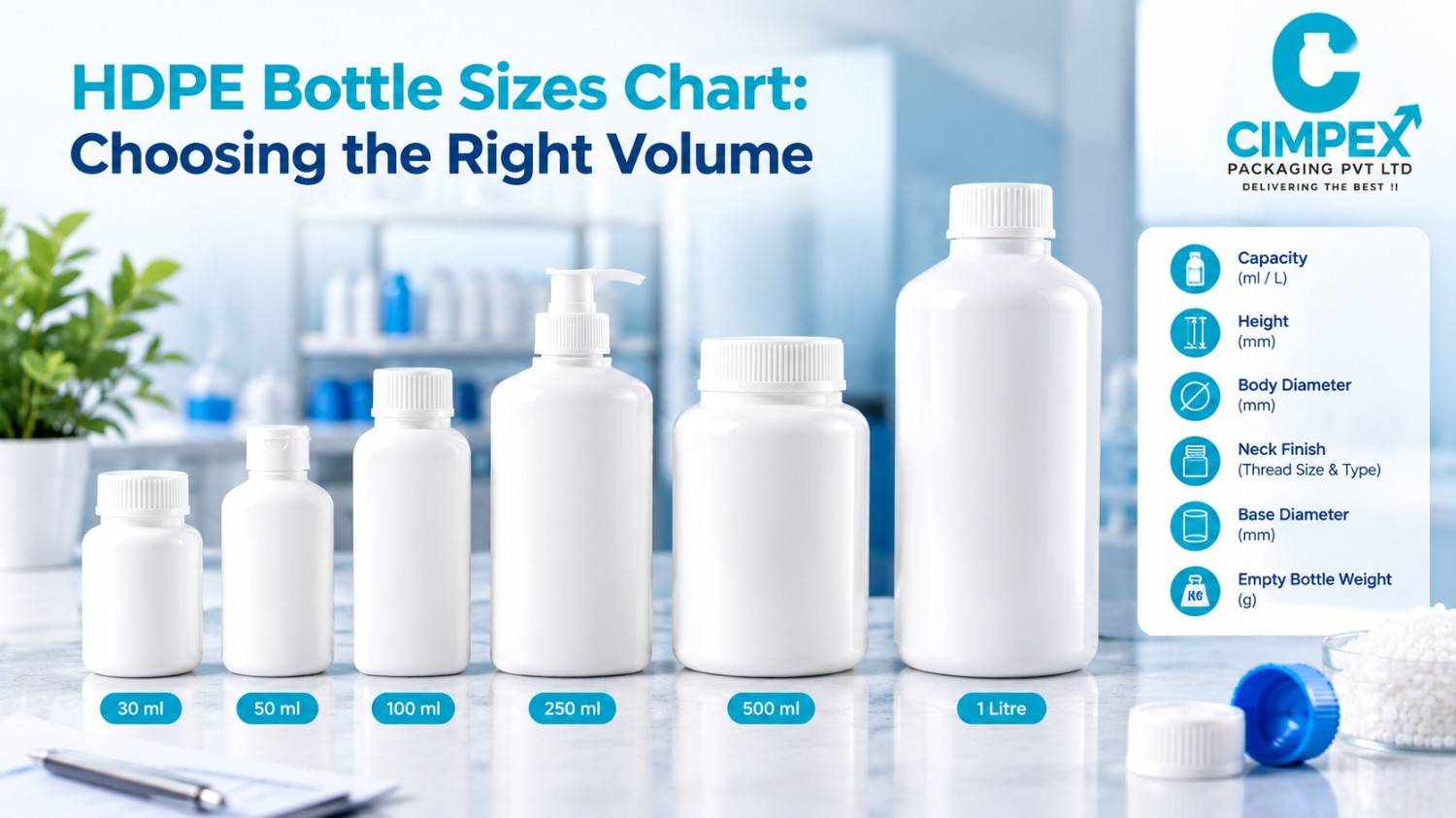
Why HDPE Bottle Sizes Matter for Pharma and FMCG Packaging
High-density polyethylene is the material of choice for a huge share of pharmaceutical, nutraceutical, agrochemical, and personal care packaging because it is chemically resistant, lightweight, and easy to mould into consistent shapes. But the material only does its job well when the bottle itself is sized correctly. HDPE bottle sizes are not just about how much liquid or powder fits inside; they also determine headspace for expansion, how the bottle sits in a carton, how it performs on an automated filling line, and how it looks on a retail shelf next to competing products. A brand that picks HDPE bottle sizes without checking fill volume against neck diameter, base stability, and wall thickness often discovers problems only after the first production run. That is why most experienced buyers start with a size chart rather than picking a bottle on appearance alone.Understanding the HDPE Bottle Size Chart
An hdpe bottle size chart is essentially a reference table that lists nominal volume alongside the physical measurements a formulation, filling, and labelling team need. A well-built chart typically includes:- Nominal capacity in millilitres or litres
- Overall height and body diameter
- Neck finish (the thread size and type that determines cap compatibility)
- Base diameter, which affects stability during filling and transport
- Approximate empty bottle weight, useful for shipping calculations
HDPE Bottle Capacity and How It Is Measured
HDPE bottle capacity is usually expressed in two ways: nominal capacity, which is the labelled or intended fill volume, and brimful capacity, which is the absolute maximum the container can hold if filled to the very top. The difference between the two is the headspace, and it matters more than many first-time buyers expect. Products that expand with temperature, foam during filling, or need room for a dropper or pump require more headspace, while dense creams or tablets can be filled closer to brimful capacity. When comparing hdpe bottle capacity across suppliers, always confirm whether the quoted number is nominal or brimful, since a bottle marketed as “100ml” can hold noticeably more or less at the brim depending on the manufacturer.Small-Volume Bottles: The 30ml HDPE Bottle Range
A 30ml hdpe bottle is common in categories where dosage precision or product concentration matters, such as eye and ear drop formulations, concentrated tonics, or sample-sized cosmetic products. At this volume, neck finish and dropper or nozzle compatibility usually matter more than base stability, since the bottle is light and easy to handle. Buyers sourcing a 30ml hdpe bottle should also check wall thickness, because very small bottles can feel flimsy if the resin grade or wall profile is not right for squeeze-and-dispense use.Mid-Volume Bottles: The 100ml HDPE Bottle Range
The 100ml hdpe bottle size sits in a versatile middle ground used across lotions, liquid tonics, sanitizers, and household concentrates. It is large enough to stand securely on a filling line yet still compact for retail shelving and courier shipping. Many brands treat the 100ml hdpe bottle as their standard “trial size” or travel-friendly variant, which means label real estate and cap type both need to be planned carefully at this volume since there is less surface area than on larger containers.Large-Volume Bottles: The 1 Litre HDPE Bottle Range
A 1 litre hdpe bottle is typical for household cleaners, bulk liquid concentrates, and larger pharma or agrochemical formulations where dosing happens over multiple uses rather than a single application. At this size, base diameter and wall thickness become more important than at smaller volumes, because a full 1 litre hdpe bottle carries meaningfully more weight and needs to resist deformation during stacking, palletisation, and transport. Buyers should also confirm handle or grip design if the bottle will be lifted repeatedly by end users.HDPE Bottle Dimensions: Neck Size, Height, and Diameter
Beyond capacity, hdpe bottle dimensions determine whether a bottle actually fits your existing caps, labels, cartons, and filling equipment. The three dimensions that matter most are:- Neck finish: usually described by a code such as 24/410 or 28/415, indicating thread diameter and thread style. This determines which caps, pumps, or droppers are compatible.
- Overall height and shoulder profile: affects carton fit and labelling machine settings, especially for wrap-around labels.
- Base diameter and footprint: influences how many bottles fit per pallet layer and how stable the bottle is during high-speed filling.
Key Factors to Consider When Choosing HDPE Bottle Sizes
Practical Selection Checklist
- Match nominal capacity to actual dose or usage pattern, not just a round number.
- Confirm neck finish compatibility with your chosen cap, pump, or dropper.
- Account for headspace if the formulation expands, foams, or needs a dip tube.
- Check base diameter against carton and pallet layout to avoid wasted space.
- Ask for brimful capacity data, not just nominal capacity, when precision filling matters.
Common Mistakes in Selecting Plastic Bottle Sizes India Buyers Should Avoid
- Choosing a bottle by shelf appeal without checking fill-line compatibility.
- Assuming all suppliers measure capacity the same way, risking under- or overfill.
- Ignoring wall thickness on smaller volumes, causing bottles to dent in transit.
- Skipping physical samples before committing to bulk tooling or production runs.
HDPE Bottle Size Chart: Quick Reference Comparison
| Volume Range | Typical Neck Finish | Common Applications | Key Consideration |
| 30ml and below | Small dropper or nozzle necks | Eye drops, concentrates, samples | Precise dosing and dropper fit |
| 60ml–100ml | Mid-size screw necks | Lotions, tonics, sanitizers | Balance of shelf presence and portability |
| 200ml–500ml | Standard screw necks | Syrups, personal care, household liquids | Label space and cap torque |
| 1 litre and above | Wide or reinforced necks | Cleaners, bulk concentrates, agrochemicals | Base stability and stacking strength |
Matching Bottle Size to Product and Industry
Pharma buyers generally prioritise dosing accuracy, tamper-evidence, and induction-seal compatibility, which narrows the useful range of hdpe bottle capacity for a given formulation. FMCG buyers often weigh shelf visibility and perceived value alongside cost per unit, which can push size decisions toward rounder, more familiar volumes. Agrochemical and industrial buyers tend to prioritise structural strength and stacking behaviour, since their products are frequently shipped in bulk. In every case, treat the size chart as a starting conversation with your packaging supplier rather than a catalogue to pick from blindly. Confirming HDPE bottle sizes against your filling equipment, cap supplier, and carton design avoids costly rework once production begins. According to the British Plastics Federation, high-density polyethylene’s rigidity and chemical resistance make it a preferred packaging material, which explains why HDPE bottle sizes are standardised so consistently across pharma and FMCG supply chains.Conclusion
Selecting the right HDPE bottle sizes comes down to matching capacity, dimensions, and neck finish to your product, filling process, and industry requirements, rather than choosing a size on appearance alone. A reliable size chart, clear brimful and nominal capacity data, and early confirmation of neck compatibility together prevent the most common packaging mistakes. Whether you need a 30ml hdpe bottle for a concentrated formulation or a 1 litre hdpe bottle for a household product, treat the chart as a working reference rather than a final answer. If you are finalising packaging for a pharma, FMCG, or industrial product, review your fill volume, neck compatibility, and stacking requirements before selecting a bottle. Explore the full range of HDPE bottle sizes or get in touch with the team for guidance based on your formulation and filling line.Frequently Asked Questions
A standard hdpe bottle size chart lists nominal capacity alongside height, diameter, and neck finish. It helps buyers compare HDPE bottle sizes across suppliers and confirm compatibility with caps, labels, and filling lines before ordering.
Nominal capacity is the intended fill volume, while brimful capacity is the maximum the bottle holds when filled to the top. The gap between them is headspace, which matters for products that expand or need room for a dispensing mechanism.
Yes, a 30ml hdpe bottle is commonly used for eye drops, ear drops, and concentrated liquid products where dosing precision matters more than shelf visibility. Neck finish and dropper compatibility should be confirmed before ordering.
The 100ml hdpe bottle balances shelf presence with portability, making it a common choice for lotions, sanitizers, and trial-size products. It fits standard filling lines while still being compact enough for retail and courier shipping.
Buyers should confirm base diameter, wall thickness, and handle design, since a full 1 litre hdpe bottle carries significant weight. These factors affect stacking stability and how the bottle performs during transport and repeated use.
Hdpe bottle dimensions, especially neck finish and shoulder profile, determine which caps, pumps, or droppers fit and how labels align during application. Mismatched dimensions can make a batch of caps or labels unusable.
Stock mould sizes are generally faster to produce than custom volumes, so ask suppliers which plastic bottle sizes India they hold in existing tooling. This avoids the longer lead times associated with new mould development.