


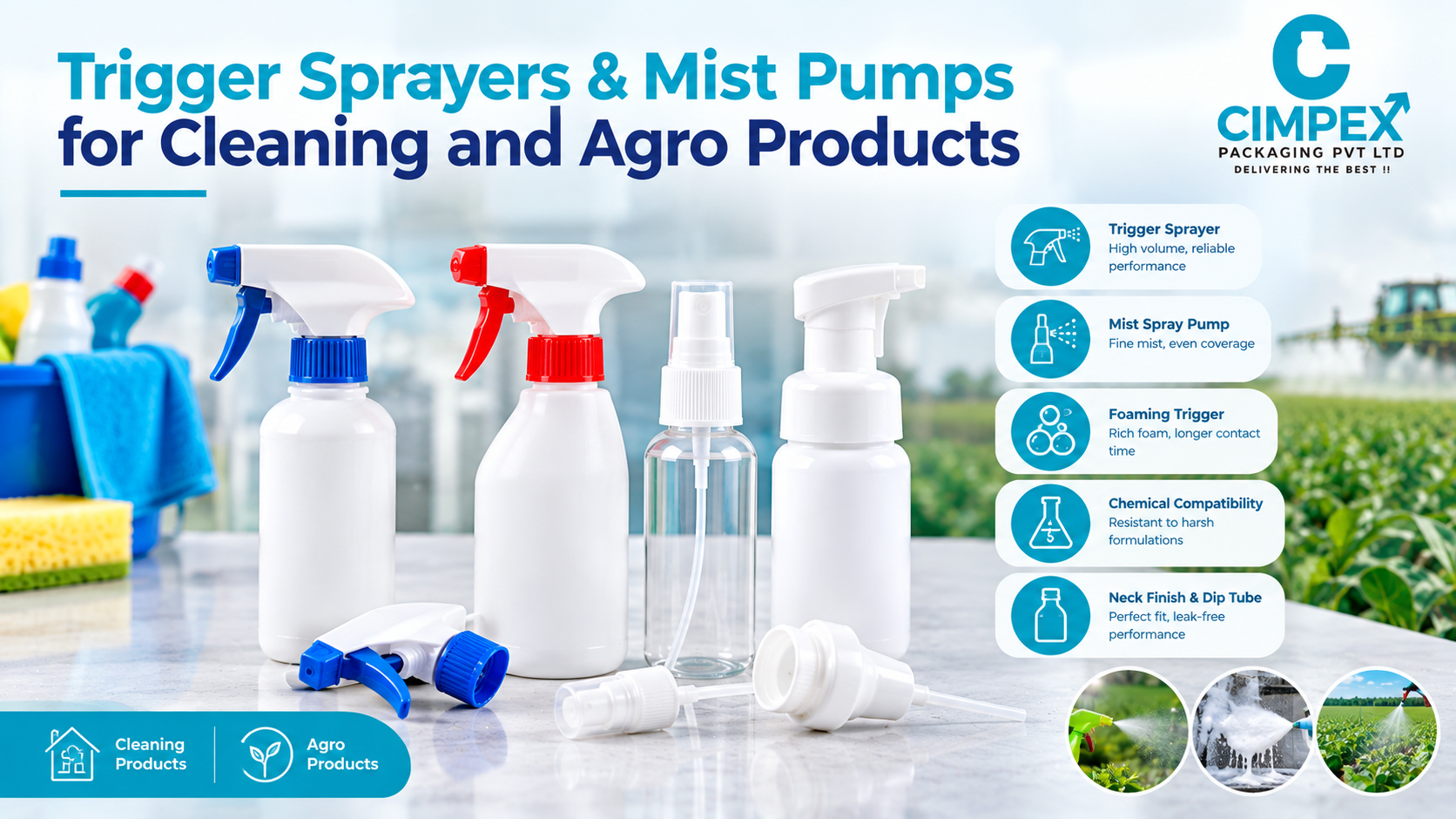
Choosing between trigger sprayers, mist pumps, and foaming dispensers shapes how a cleaning or agrochemical product actually performs once it reaches the end user, since dispensing mechanism, chemical resistance, and dip tube fit each affect usability differently. This guide walks through how these dispensing formats differ, what output and spray pattern to expect from each, how chemical compatibility is tested for cleaning and agro formulations, and how neck finish choices affect assembly on the filling line.
Trigger vs Mist vs Foaming Sprayers
A trigger sprayer is a manually actuated pump that releases a stream or coarse spray with each squeeze of the handle, and it remains the most common dispensing format for household and industrial cleaning products because it delivers a relatively large volume per actuation with minimal moving parts to fail. A mist spray pump, by contrast, is engineered to atomise liquid into a fine spray rather than a stream, which is preferred for surface disinfectants, glass cleaners, and lighter agro formulations where even coverage matters more than volume.
Foaming trigger sprayers add an additional chamber that mixes air into the liquid as it is dispensed, producing a foam rather than a liquid spray. This format has become popular for bathroom and kitchen cleaners because foam clings to vertical surfaces longer than a liquid mist, giving the active ingredients more contact time. Each of these three formats uses a broadly similar external trigger mechanism, but the internal valve and nozzle geometry differ substantially, which is why brands should specify the exact dispensing behaviour they need rather than assuming any trigger sprayer will perform the same.
Output and Spray Pattern
Output volume and spray pattern are the two specifications that most influence how a cleaning or agro product is perceived by the end user. A standard trigger sprayer typically dispenses a defined volume per stroke, with adjustable nozzles that let the user switch between a stream and a wider spray pattern. A mist spray pump is generally calibrated for a smaller output per stroke, since its purpose is fine, even coverage rather than volume.
What Affects Output and Pattern
- Nozzle orifice size, which determines droplet size and spray width
- Piston stroke length inside the pump body, which sets the volume dispensed per actuation
- Whether the mechanism includes a lock-off feature to prevent accidental discharge during transport
- The viscosity of the formulation itself, since thicker liquids require different internal tolerances than water-thin sprays
Brands developing an agro sprayer bottle line should pay particular attention to spray pattern consistency, since uneven droplet distribution can directly affect how well a pesticide or foliar spray formulation covers the target area. A sprayer that performs well with a water-based cleaner will not necessarily behave the same way with a more viscous agrochemical suspension, which is why sample testing with the actual formulation is strongly recommended before finalising a pump design.
Chemical Compatibility for Cleaners and Agro Products
Chemical compatibility is one of the more technical considerations in sprayer selection, and it becomes especially important for cleaning spray trigger systems and agro formulations that include acids, surfactants, or solvent components. The internal seals, dip tube, and nozzle of a sprayer must resist degradation from prolonged contact with the formulation, since a seal that softens or swells over time can lead to leaks or inconsistent output later in the product’s shelf life.
Manufacturers producing trigger sprayers for industrial cleaning applications typically test compatibility against common formulation classes such as chlorine-based disinfectants, acid-based descalers, and surfactant-heavy degreasers, since these represent the most demanding use cases. For agro sprayer bottle applications, compatibility testing usually extends to herbicide and pesticide concentrates, which can be more aggressive toward standard plastic components than typical household cleaners. Working with a spray pump manufacturer in India that maintains documented compatibility data for these formulation categories reduces the risk of field failures after a product has already shipped.
Neck Finish and Dip Tube Fit
A sprayer is only as reliable as its fit with the bottle it sits on, which makes neck finish selection a practical rather than cosmetic decision. Most trigger sprayers and mist spray pumps are supplied in standard neck finishes such as 28/410, matched to the corresponding bottle neck thread. Mismatched neck finishes are one of the more common causes of leaking or loose-fitting sprayers reported by packaging teams, so confirming thread compatibility before ordering bottles and sprayers separately is a worthwhile step.
Dip tube length is equally important and is often overlooked until the filling stage. A dip tube that is cut too long for the bottle can bend or kink inside the container, restricting flow, while one cut too short will fail to draw liquid once the bottle is partially empty, leaving unusable product at the bottom. Reliable manufacturers custom-cut dip tubes to match the specific bottle height being used, rather than supplying a fixed length across multiple bottle sizes.
Choosing the Right Sprayer for Your Product
Selecting between a trigger sprayer, mist spray pump, or foaming trigger ultimately comes down to how the product is meant to be used and what the formulation itself requires.
Practical Selection Factors
- Match the dispensing format to end-use behaviour: streams and coarse sprays for heavy-duty cleaners, fine mist for surface disinfectants, foam for products that need extended surface contact
- Confirm chemical compatibility with your specific formulation rather than relying on generic material specifications
- Check neck finish and dip tube length against your exact bottle dimensions before committing to a production run
- Request physical samples and test them under real filling-line conditions, since dispensing behaviour can vary slightly between production batches
| Sprayer Type | Best For | Typical Spray Pattern |
| Trigger Sprayer | General household and industrial cleaners | Stream to coarse spray |
| Mist Spray Pump | Disinfectants, glass cleaners, light agro use | Fine, even mist |
| Foaming Trigger | Bathroom and kitchen surface cleaners | Foam with extended dwell time |
Conclusion
Trigger sprayers, mist pumps, and foaming dispensers each serve a distinct purpose, and the right choice depends on the formulation, the intended surface contact time, and how the product will be used in practice. Getting the neck finish, dip tube length, and chemical compatibility right at the design stage avoids costly rework once a product is already in bulk production. Whether you are packaging a household cleaner, an industrial degreaser, or an agrochemical formulation, working with an experienced spray pump manufacturer in India helps ensure the dispensing mechanism performs consistently from the first bottle to the last.
If your team is finalising packaging for a new cleaning or agro product, confirm your formulation’s chemical compatibility requirements and bottle neck specifications before sampling. View Cimpex Packaging’s dispenser pump range or reach out to discuss trigger, mist, and foaming options suited to your application.
Frequently Asked Questions
What is the difference between a trigger sprayer and a mist spray pump?
A trigger sprayer typically dispenses a stream or coarse spray with a larger volume per actuation, while a mist spray pump atomises liquid into a fine, even mist better suited to disinfectants and light-coverage applications.
Are trigger sprayers suitable for agrochemical formulations?
Yes, many agro sprayer bottle applications use trigger sprayers, though the internal seals and dip tube must be verified for compatibility with herbicide or pesticide concentrates, which can be more aggressive than standard household cleaners.
How do I know if a sprayer is chemically compatible with my formulation?
Compatibility is confirmed by exposing the sprayer’s seals, dip tube, and nozzle to the actual formulation over an extended period and checking for softening, swelling, discolouration, or reduced output.
What neck finish do most trigger sprayers use?
Most trigger sprayers and mist pumps are supplied in standard neck finishes such as 28/410, though manufacturers can produce custom neck finishes to match specific bottle designs on request.
Why does dip tube length matter?
A dip tube that is too long can kink inside the bottle and restrict flow, while one that is too short leaves unusable product at the bottom once the bottle is partially empty, so it should be matched to the exact bottle height.
What makes a foaming trigger different from a standard trigger sprayer?
A foaming trigger includes an additional chamber that mixes air into the liquid as it is dispensed, producing foam that clings to vertical surfaces longer than a standard liquid spray or mist.
Can trigger sprayers and mist pumps be custom branded?
Yes, most manufacturers offer custom actuator colours, closure designs, and printed branding on both the sprayer and the matching bottle, allowing cleaning and agro brands to maintain consistent shelf presentation.