


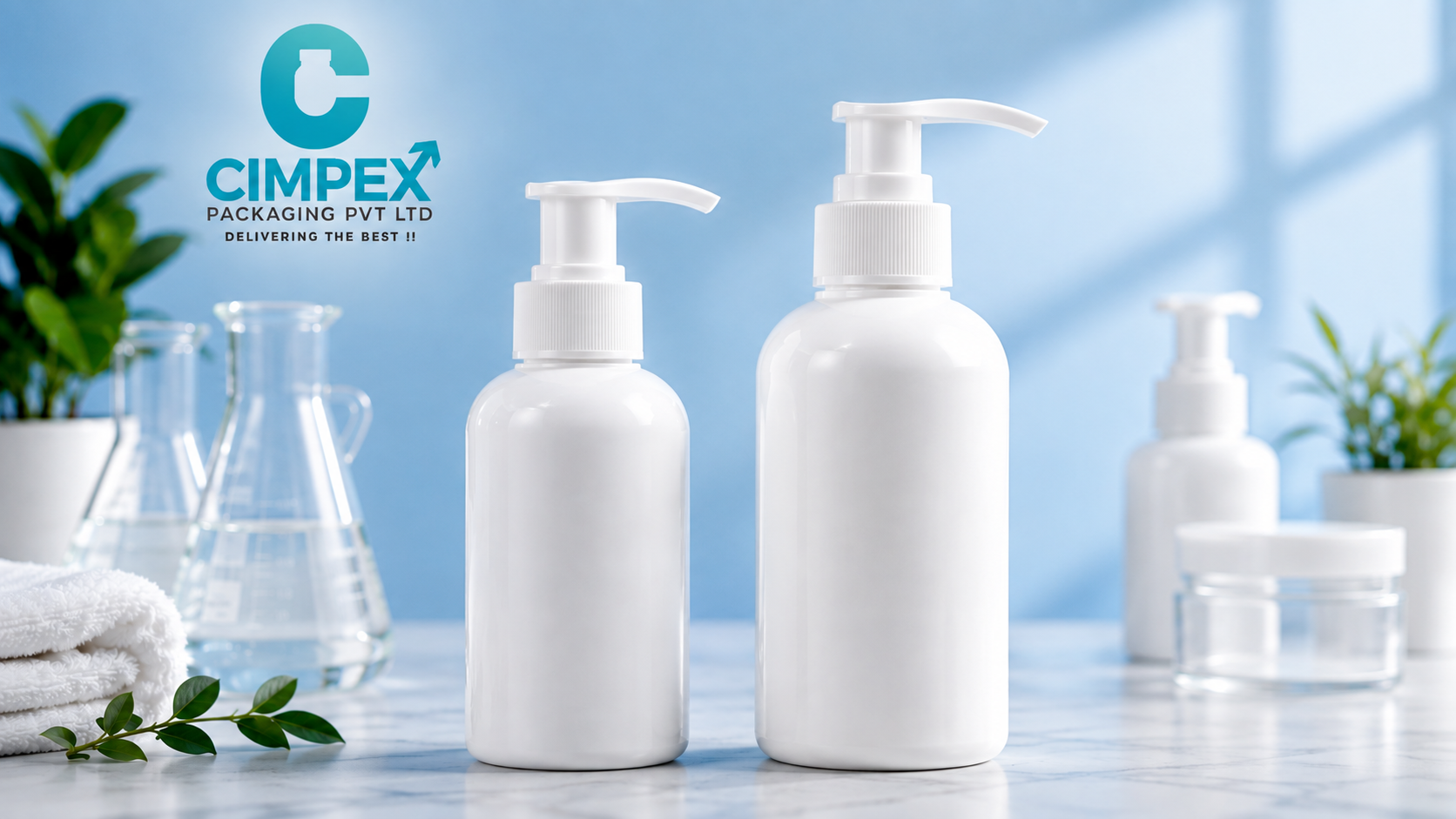
Ask any packaging-development lead who has re-tooled a bottle mid-launch, and they’ll tell you the mistake almost always traces back to neck-size mismatch, not the pump mechanism itself. Working with the right dispenser pump manufacturer in India means getting the 24/410 vs 28/410 decision right before the bottle mould is even cut, because retrofitting a pump to the wrong neck finish is far more expensive than specifying correctly the first time. This guide breaks down what the numbers actually mean, when each size fits, and how output and viscosity should drive your choice not habit or whatever the last supplier had in stock.
Cimpex Packaging manufactures both dispenser pumps and the HDPE/PP bottles they mount on, which means neck-to-pump fit is engineered as one system rather than assembled from two separate suppliers guessing at each other’s tolerances.
What Do 24/410 and 28/410 Actually Mean?
Both numbers describe the neck finish, not the pump mechanism. The first number is the outer diameter of the bottle neck in millimetres; “410” identifies the thread series, which determines thread pitch and start position. A dispenser pump manufacturer in India will always spec the pump body to match this exact neck geometry a 24/410 pump will not seal reliably on a 28/410 neck, even though both look similar in a photo.
- 24/410 a narrower neck, common on smaller bottles from 50 ml to roughly 250 ml.
- 28/410 a wider neck, typically used from 200 ml up through 500 ml and larger formats where a bigger dip tube and piston chamber support higher output per stroke.
How Does Neck Size Affect Pump Output?
This is the question that actually matters commercially: a wider neck isn’t just cosmetic, it changes how much product the pump delivers per actuation. A 24/410 dispenser pump manufacturer in India build typically outputs 0.10–0.20 ml per stroke on standard lotion pump configurations, while 28/410 pumps commonly deliver 0.20–0.40 ml per stroke because the larger bore accommodates a bigger piston and dip tube diameter.
- Lower output (24/410): suited to thinner serums, facial products, or concentrated actives where a small dose per pump is intentional.
- Higher output (28/410): suited to body lotions, shampoos, and liquid soaps where the user expects a generous dose in one or two strokes.
24/410 vs 28/410: Comparison Table
| Attribute | 24/410 Pump | 28/410 Pump |
| Neck outer diameter | 24 mm | 28 mm |
| Typical output/stroke | 0.10–0.20 ml | 0.20–0.40 ml |
| Common bottle range | 50–250 ml | 200–500 ml+ |
| Best-fit viscosity | Low to medium (serums, thin lotions) | Medium to high (creams, thick lotions) |
| Typical use case | Facial serum, concentrated actives | Body lotion, shampoo, liquid soap |
| Dip tube diameter | Narrower | Wider |
| Common industries | Cosmetic, pharma dermatology | FMCG personal care, cosmetic |
Matching Viscosity to Pump Choice
A dispenser pump manufacturer in India worth working with will ask about your formulation’s viscosity before recommending a neck size, because pump performance depends on far more than bore diameter alone.
- Thin, water-like fills (under 100 cP) work well with either size but tend to pair better with 24/410 for controlled dosing.
- Medium-viscosity lotions (100–1,000 cP) are the classic 28/410 application enough bore to draw the product up the dip tube without excessive priming strokes.
- Thick creams (above 1,000 cP) sometimes need a reinforced piston or a wider bore still, which is where a lotion pump manufacturer with cream-specific tooling becomes relevant rather than a generic pump.
Which Bottle Neck Finish Should You Choose?
Neck finish selection isn’t purely about the pump the bottle has to support it structurally too. A dispenser pump manufacturer in India that also moulds bottles will typically walk through:
- Confirm target output per stroke based on how the product is used (one pump vs several).
- Check bottle shoulder strength wider 28/410 necks need adequate shoulder thickness to resist cracking under repeated pump actuation.
- Match closure torque the pump housing threads onto the neck at a specified torque; too loose and it leaks, too tight and it can crack the neck finish over time.
- Review [lotion pumps](https://cimpexpackaging.com/product-category/lotion-pump/) already in production for a similar viscosity band before commissioning anything custom.
Actuator, Dip Tube and Locking Collar: The Parts That Change With Neck Size
Beyond the visible pump head, three components shift when you move from 24/410 to 28/410:
- Actuator size the button or nozzle scales with bore diameter to keep stroke ergonomics consistent.
- Dip tube length and diameter must be cut to the exact bottle height and wide enough to draw viscous product without cavitation.
- Locking collar prevents the pump from actuating during transit; a dispenser pump manufacturer in India should offer both locking and non-locking variants across both neck sizes.
Industries That Rely on 24/410 and 28/410 Pumps
Different sectors gravitate toward different neck sizes based on formulation and dosing habits, and a dispenser pump manufacturer in India serving multiple industries sees this pattern repeat across categories:
- Cosmetic and personal care facial serums and treatment actives typically specify 24/410 for controlled, small-dose application, while body lotions and shampoos favour 28/410.
- Pharma and dermatology topical formulations often use 24/410 for precise dosing, particularly where the active ingredient concentration makes overdosing a real concern.
- FMCG liquid soap and sanitiser 28/410 dominates here because higher output per stroke matches how consumers actually use hand soap or sanitiser dispensers.
- Nutraceutical liquids less common for pumps generally, but where used, neck size follows viscosity the same way it does in cosmetics.
Sourcing Checklist Before You Finalise Pump Selection
Before locking in a decision with any dispenser pump manufacturer in India, run through this checklist:
- Confirm formulation viscosity with an actual measurement, not an estimate.
- Decide target output per stroke based on how the consumer will use the product.
- Match neck finish to bottle shoulder design and confirm torque specification.
- Request physical pump samples on your actual bottle, not a generic test bottle.
- Run a fill-line compatibility trial before committing to full production tooling.
- Confirm locking-collar requirement for transit safety, especially for export shipments.
Skipping the physical sample step is the most common reason brands discover a fit problem only after a production run has already been filled and capped.
Why Bottle and Pump Engineering Should Happen Together
Sourcing bottles and pumps from two unrelated suppliers is common, but it shifts the compatibility risk onto the brand instead of the manufacturer. A dispenser pump manufacturer in India that also produces the bottle can control shoulder wall thickness around the neck finish, verify torque specification on the actual mould rather than a generic reference bottle, and adjust dip-tube length to the precise internal bottle height rather than a rounded estimate. This matters more at scale a torque mismatch that shows up as a 2% leak rate in a small batch becomes a real cost and reputational issue once you’re filling tens of thousands of units a month.
Common Mistakes When Sourcing Dispenser Pumps
- Ordering pumps and bottles from different suppliers without confirming thread compatibility on a physical sample first.
- Choosing neck size based on bottle aesthetics rather than required output per stroke.
- Skipping a fill-line trial run before committing to a full production order.
- Assuming all 28/410 pumps are interchangeable piston material and spring tension still vary between manufacturers.
Lead Times and MOQs for Custom Pump Tooling
If a stock 24/410 or 28/410 pump doesn’t match your actuator branding or output requirement exactly, most manufacturers offer custom actuator tooling separately from the core pump mechanism, since the piston and housing are standardised parts while the visible actuator cap is where brands usually want differentiation. A dispenser pump manufacturer in India running custom actuator tooling typically quotes shorter lead times than full bottle mould development, because the internal pump geometry doesn’t change only the external cap shape does. MOQs for custom actuator colour or branding tend to be lower than for a brand-new pump mechanism, which makes this the more accessible customisation route for smaller brands testing a new SKU.
Picking the Right Neck
The 24/410 vs 28/410 decision comes down to two numbers you should already know before you call a supplier: your target output per stroke and your formulation’s viscosity. A dispenser pump manufacturer in India that engineers the bottle and pump together removes the guesswork you’re not hoping two separately sourced components happen to fit. If you’re still unsure which neck size suits your formulation, discuss neck sizes with our packaging team before finalising bottle tooling.
Frequently Asked Questions
What is the difference between 24/410 and 28/410 pumps?
The number pair denotes neck outer diameter and thread series; 28/410 has a wider neck and typically delivers more output per stroke than 24/410.
Can I use a 24/410 pump on a 28/410 bottle neck?
No the thread diameters don’t match, so the pump won’t seal or actuate correctly on the wrong neck size.
Which pump size is best for body lotion?
28/410 is the more common choice for body lotion because the wider bore supports higher output per stroke for medium-to-thick viscosities.
How much product does a standard dispenser pump release per stroke?
Typically 0.10–0.40 ml depending on neck size and piston design, with 28/410 pumps generally delivering more per stroke than 24/410.
Does a dispenser pump manufacturer in India also supply matching bottles?
Reputable manufacturers that mould both bottles and pumps in-house can match neck finish and shoulder strength as one engineered system.
Why should I choose a dispenser pump manufacturer in India over an importer?
A local dispenser pump manufacturer in India shortens lead time, allows physical sample checks before full production, and avoids import duty and freight delays on tooling changes.
What viscosity range works best with a 24/410 pump?
24/410 suits low to medium viscosity fills such as facial serums and thinner lotions, generally under 500 cP.
Do locking collars come in both 24/410 and 28/410 sizes?
Yes most dispenser pump manufacturers offer locking and non-locking collar variants across both common neck sizes.