


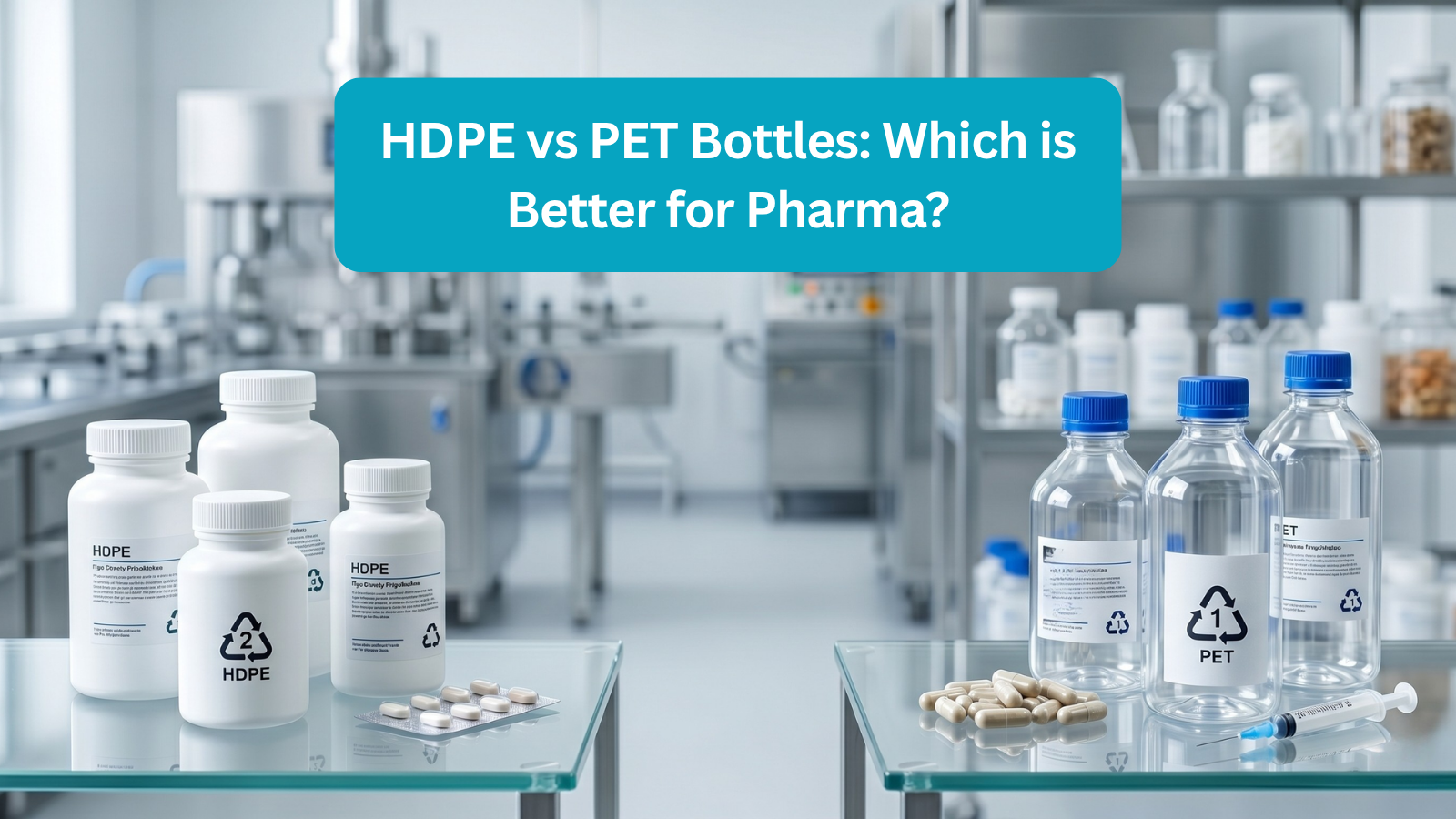
Choosing the right packaging material is one of the most important decisions a pharmaceutical company makes. The bottle that holds a medicine does far more than carry it — it protects the product from moisture, light, oxygen and contamination right up to the moment a patient uses it. This is exactly why partnering with an experienced HDPE Bottle Manufacturer or a reliable PET Bottle Manufacturer can make such a big difference to product quality. The wrong material may shorten shelf life or weaken a sensitive formulation, while the right one keeps the medicine safe, stable and compliant. As demand for durable and safe packaging keeps rising across India’s pharma, FMCG, cosmetic and healthcare sectors, understanding the real difference between HDPE and PET has become essential for buyers, brand owners, distributors and exporters.
This guide breaks down both materials in plain language — their strengths, their limits, and where each one fits best in pharmaceutical and consumer packaging.
Why Packaging Quality Matters in Pharma and Healthcare
In pharmaceuticals, packaging is part of the product itself. A tablet or syrup is only as good as the container protecting it. Low-quality bottles can let in moisture, react with the contents, crack during transport or fail safety checks during export. For tightly regulated industries, that is a serious commercial and reputational risk.
Strong packaging protects a product in several ways:
- Keeps moisture and humidity away from tablets, capsules and powders
- Blocks the light that can degrade sensitive active ingredients
- Resists chemical reactions between the bottle and its contents
- Survives long-distance shipping without leaking or cracking
- Meets the safety and labelling standards required for sale and export
This is why pharma companies, FMCG brands and cosmetic businesses increasingly look for a packaging partner who treats material quality as a priority — not an afterthought.
What Is HDPE? Understanding HDPE Bottles
HDPE stands for High-Density Polyethylene. It is one of the most widely used plastics in pharmaceutical and healthcare packaging. HDPE bottles are usually opaque or slightly cloudy, lightweight and very strong. They are best known for their excellent moisture barrier, which is why they are such a popular choice for solid medicines.
A trusted HDPE container manufacturer can produce bottles in a wide range of sizes and neck designs for tablets, capsules, dry syrups and powders — all built to keep the contents dry and protected.
Key Properties of HDPE Bottles
- Excellent moisture and water-vapour resistance
- Strong chemical resistance against many substances
- Good impact strength — handles drops and rough transport well
- Lightweight, which helps lower shipping costs
- Naturally opaque, offering some protection from light
- Easy to recycle (resin identification code 2)
Where HDPE Bottles Are Commonly Used
- Tablet and capsule containers
- Dry syrup and powder bottles
- Nutraceutical and food-supplement packaging
- Chemical and agro-product containers
- Household and industrial cleaning products
- Bulk healthcare and hospital supplies
Because of its strength and moisture protection, HDPE is often the first choice for solid-dose pharma products that must stay dry throughout their shelf life.
What Is PET? Understanding PET Bottles
PET stands for Polyethylene Terephthalate. It is a clear, glossy and rigid plastic used widely when product visibility and presentation matter. PET bottles look premium on the shelf and let customers see the liquid inside, which makes them popular for syrups, tonics and cosmetic products.
A specialised PET Bottle Manufacturer can deliver crystal-clear bottles with smooth finishes and strong, leak-proof closures for liquid formulations.
Key Properties of PET Bottles
- High clarity and transparency — almost glass-like
- Good barrier against oxygen and other gases
- Rigid and shatter-resistant
- Lightweight and easy to handle
- An excellent surface for labels and branding
- Fully recyclable (resin identification code 1)
Where PET Bottles Are Commonly Used
- Liquid medicines, syrups and oral solutions
- Cough tonics and health drinks
- Cosmetic lotions, serums and oils
- Food-grade liquids and edible products
- FMCG products that need strong shelf appeal
- Sample and trial packs where visibility helps
PET works best where customers want to see the product and where presentation supports the brand image.
HDPE vs PET — A Simple Side-by-Side Comparison
Both materials are safe, recyclable and widely used in pharma. The right choice depends on what you are packing. The table below makes the differences clear at a glance.
| Feature | HDPE Bottles | PET Bottles |
|---|---|---|
| Appearance | Opaque / cloudy | Clear / transparent |
| Moisture barrier | Excellent | Moderate |
| Oxygen / gas barrier | Moderate | Good |
| Chemical resistance | Very high | Good |
| Strength | Flexible & tough | Rigid & shatter-resistant |
| Light protection | Natural protection | Needs added tint |
| Best suited for | Tablets, capsules, powders | Syrups, liquids, cosmetics |
| Shelf appeal / branding | Lower | High |
| Recycling code | 2 | 1 |
Which Is Better for Pharma — HDPE or PET?
There is no single winner. The better material depends on the dosage form, the sensitivity of the drug and how the product is sold. A good packaging partner will recommend the right one based on your formulation rather than pushing a one-size-fits-all option.
When HDPE Is the Better Choice
Choose HDPE when:
- You are packing tablets, capsules or moisture-sensitive powders
- Long shelf life and dryness are critical to the product
- The formulation needs strong chemical resistance
- You want a tough bottle that survives bulk transport
- Light protection matters and an opaque container is preferred
When PET Is the Better Choice
Choose PET when:
- You are packing syrups, tonics or other liquid medicines
- Product visibility helps build customer trust
- You want a premium, glossy look for retail shelves
- Branding and clear labelling are a priority
- The formulation is more sensitive to oxygen than to moisture
For many pharma businesses, the smartest approach is to work with a single Plastic bottle supplier India can rely on for both HDPE and PET — keeping quality consistent across the entire product range.
Where PP Bottles Fit In Pharma Packaging
Polypropylene (PP) is a third material worth knowing about. PP bottles handle heat very well and can be sterilised, which makes them useful for certain medical and laboratory products. A capable PP bottle manufacturer can also supply matching caps and closures, since PP is widely used for screw caps and child-resistant lids.
PP is often chosen for:
- Products that need heat or steam sterilisation
- Containers that face high storage temperatures
- Caps, closures and tamper-evident lids
- Certain lab, diagnostic and clinical packaging
The Rise of Multilayer Bottles in Pharma
For highly sensitive drugs, a single layer of plastic is sometimes not enough. This is where multilayer bottles come in. They combine different plastic layers to create a much stronger barrier against moisture, oxygen and light at the same time. Working with an experienced Multilayer Bottle Manufacturer in India gives pharma brands access to advanced protection for products with strict stability requirements.
Multilayer packaging is especially valuable for:
- Sensitive formulations with short stability windows
- Products that must block both moisture and oxygen
- Export goods that travel through varied climates
- Premium pharma and nutraceutical ranges
Safety Standards in Pharmaceutical Packaging
In pharma, safety is non-negotiable. Bottles must protect not only the product but also the people using it — including children. This is why closures and seals are just as important as the bottle itself.
Child-Resistant Caps and Closures
Child-resistant caps are designed to be difficult for young children to open while remaining usable for adults. They are essential for many medicines and are often required for export to regulated markets. Quality closures should:
- Pass recognised child-resistance testing standards
- Seal tightly to keep moisture and air out
- Stay easy enough for elderly patients to open
- Fit the bottle neck precisely to avoid leaks
Tamper-Proof and Tamper-Evident Packaging
Tamper-evident features show clearly if a product has been opened before purchase. This builds trust and protects both the brand and the patient. Common features include induction seals, shrink bands and break-away rings. Good tamper-proof packaging:
- Reassures customers the product is genuine and unopened
- Supports pharma compliance requirements
- Reduces the risk of contamination
- Improves safe handling during distribution
Manufacturing Technology — Blow Molding and Injection Molding
The quality of any plastic bottle depends heavily on how it is made. Two main technologies are used in modern packaging production.
Blow molding shapes hollow bottles by inflating heated plastic inside a mould. It is ideal for HDPE and PET bottles and produces smooth, consistent, leak-proof containers. Injection molding is used for thicker, precise parts such as caps, closures and jars, where exact dimensions matter most.
Modern, automated production lines deliver:
- Consistent wall thickness and weight in every bottle
- Fewer defects and better leak-proof performance
- Faster output for bulk and wholesale orders
- Reliable quality that meets export standards
This is why automation and machine quality matter so much when choosing a manufacturing partner.
Packaging Solutions Across Industries
Plastic bottles, jars and containers are used far beyond pharma. A versatile manufacturer serves many sectors at once:
- Pharmaceutical companies — tablet bottles, syrup bottles and dropper bottles
- FMCG brands — packaging that balances cost, durability and shelf appeal
- Cosmetic manufacturers — lotion, serum and cream containers with a premium finish
- Food-grade businesses — safe, non-reactive containers for edible products
- Chemical and agro industries — chemical-resistant bottles and drums
- Industrial buyers — tough bulk packaging for storage and transport
This flexibility is exactly what brands look for in a single, dependable supplier.
Why Choose Cimpex Packaging
For businesses that want quality without compromise, Cimpex Packaging has built a reputation as a trusted packaging manufacturer in India. The focus is simple — durable, safe and compliant packaging delivered consistently, order after order.
Cimpex Packaging supports its customers with:
- Quality-focused HDPE, PET and PP packaging solutions
- Strong bulk supply capabilities for large and repeat orders
- Customised bottle shapes, sizes, colours and closures
- Deep experience in pharmaceutical and FMCG packaging
- Export-quality standards for international buyers
Whether you need leak-proof pharma bottles, food-grade containers or custom cosmetic packaging, the team focuses on getting the material, finish and safety details right. You can explore the full range and capabilities directly with Cimpex Packaging.
Sustainable Plastic Packaging Trends
Sustainability is now a key part of packaging decisions. Both HDPE and PET are widely recyclable, and many manufacturers are moving toward lighter designs, recycled content and more efficient production. Forward-looking brands are choosing:
- Recyclable HDPE and PET as a standard
- Lightweight bottles that use less material
- Designs that reduce waste without losing strength
- Suppliers who support responsible manufacturing
Choosing a partner who takes sustainability seriously protects both the environment and a brand’s long-term reputation.
The Long-Term Business Value of Quality Packaging
Quality packaging is an investment, not just a cost. Reliable bottles reduce product damage, returns and complaints. They protect shelf life, support compliance and strengthen customer trust. For exporters, consistent quality also means fewer rejections and smoother international shipments. Over time, a dependable Bulk plastic bottle supplier India businesses can count on becomes a real competitive advantage.
Conclusion
When it comes to pharma packaging, both HDPE and PET have a clear and valuable role. HDPE protects moisture-sensitive solids like tablets and capsules, while PET offers clarity and shelf appeal for liquids and cosmetics. Add PP for heat resistance and multilayer bottles for sensitive formulations, and you have a complete packaging toolkit. The right choice always depends on your product, your market and your safety needs.
Working with the right HDPE Bottle Manufacturer or PET Bottle Manufacturer — backed by strong PP bottle manufacturer capabilities, multilayer options and dependable bulk supply — keeps your products safe, compliant and ready for market. As a quality-focused Plastic bottle supplier India can trust, Cimpex Packaging brings pharmaceutical and FMCG packaging expertise, customised solutions and export-ready standards together under one roof.
If you are looking for durable, safe and compliant packaging, get in touch with Cimpex Packaging today and let the team help you choose the perfect bottle for your product.
Frequently Asked Questions
Need Safe, Durable Pharma Packaging?
From HDPE tablet bottles to PET syrup bottles and custom containers, Cimpex Packaging delivers quality-focused, export-ready solutions in bulk.