


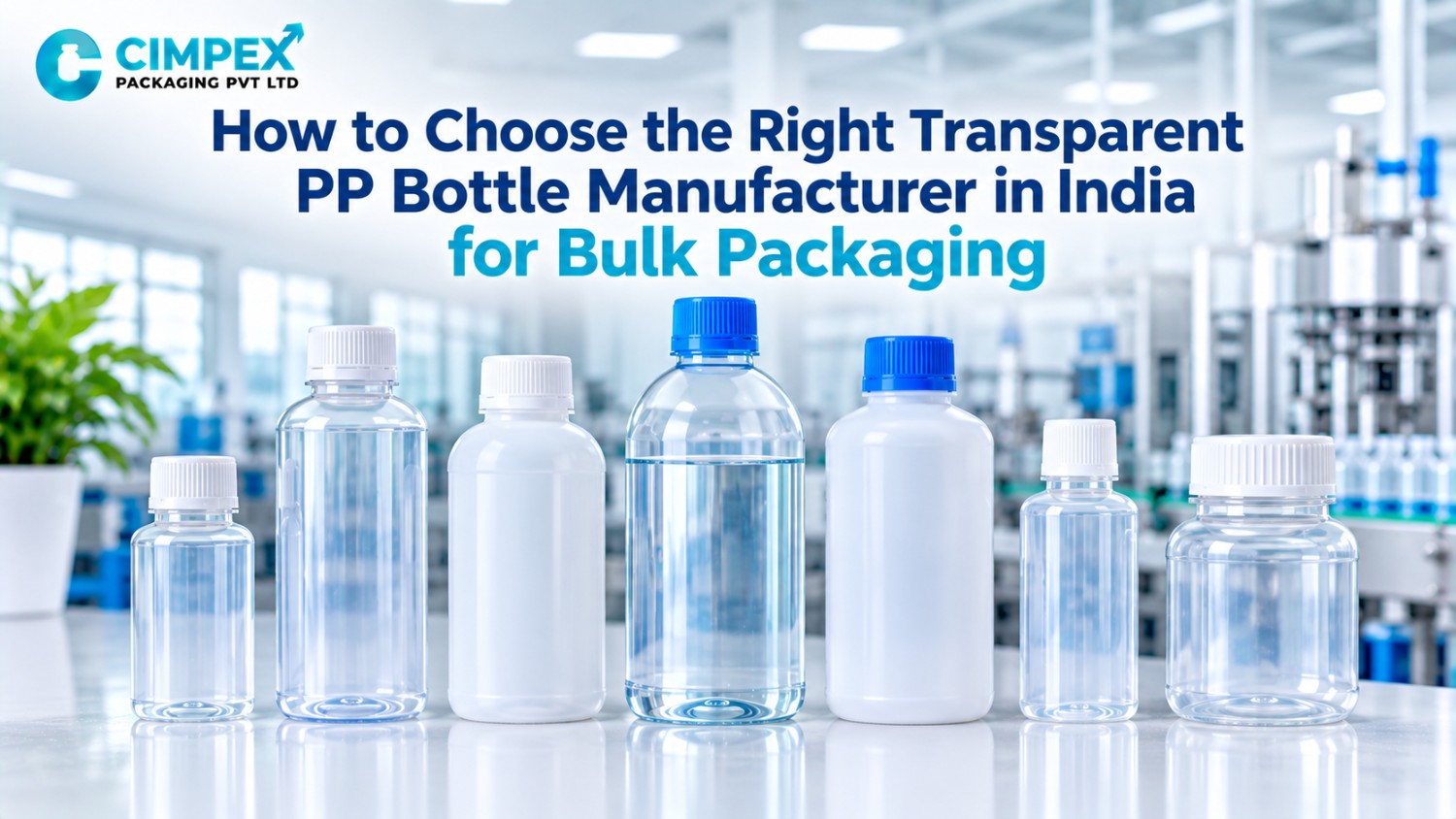
Why Polypropylene Is a Popular Choice for Bottles
Polypropylene (PP) is a thermoplastic known for its chemical resistance, low weight, rigidity and tolerance to heat. These properties explain why it appears in food containers, laboratory ware, personal care packs and medicine bottles. You can read a neutral overview of the material’s characteristics in this polypropylene reference. For packaging buyers, the practical advantages are easy to describe. PP resists most diluted acids, alkalis and alcohols. It handles higher temperatures than many other commodity plastics, which matters for hot-fill products and for bottles that need to be sterilised. It is also light, so freight costs per unit stay manageable when orders run into tens of thousands of pieces. PP does have limits. Compared with PET, standard polypropylene is naturally more translucent than glass-clear, and it is less suited to products that are highly sensitive to oxygen unless a barrier layer is added. A good PP bottle manufacturer in India will explain these trade-offs openly rather than promising that one material suits every product. An experienced PP bottle manufacturer in India should match resin choice to your product, not just supply stock shapes.What to Look for in a PP Bottle Manufacturer in India
Many buyers begin with price and a sample bottle. A more reliable approach is to evaluate the manufacturer’s process, because consistency across a long production run depends on process control, not on a single good sample.Resin Grade and Raw Material Control
Ask which resin grades the PP bottle manufacturer in India uses and whether they can supply documentation for the grade. Virgin resin is the usual expectation for pharmaceutical and food-contact packaging. Batch traceability, meaning the ability to link a delivered lot to a resin lot, is a sign of a disciplined operation.Clarity and Surface Finish
Buyers who want a see-through pack should discuss clarity early. Clarified PP grades and carefully controlled moulding conditions improve transparency, but the result will differ from PET or glass. Request a physical sample filled with your actual product, because the liquid inside changes how clarity is perceived.Dimensional Accuracy and Neck Finish
A bottle that looks perfect but does not seal with your closure creates leaks and rejected batches. Confirm the neck finish, thread profile and wall thickness, and check them against your cap supplier’s drawings. Any serious PP bottle manufacturer in India will share a drawing with stated tolerances. Small variations in neck dimensions are one of the most common causes of line stoppages at the filling stage.Key Questions to Ask Before Shortlisting
- Which resin grades do you use, and can you share specifications for the grade proposed?
- What in-process and final inspection checks are carried out on each batch?
- How do you handle leak, drop and closure-fit testing?
- What is your typical lead time for repeat orders, and how do you manage raw material shortages?
- Can you provide samples from production tooling rather than from a prototype mould?
Evaluating a Transparent PP Bottle Supplier in India
When your brand depends on product visibility, a transparent PP bottle supplier in India should be assessed on more than appearance. Transparency in PP is influenced by resin type, wall thickness, cooling rate and mould finish. A PP bottle manufacturer in India who controls these variables will deliver bottles that look the same in the first carton and the fiftieth. Ask to see sample bottles beside a competitor’s product under the same lighting. Look for haze, flow lines, gate marks at the base and uneven wall sections. These cosmetic defects often signal underlying process problems that can also affect strength and sealing. A transparent bottle also allows your customers to see the fill level and the product colour, which builds trust for syrups, tinctures, liquid supplements and household preparations. If your formulation is light-sensitive, however, transparency becomes a drawback, and you should consider an opaque or tinted option instead.Polypropylene Bottle Manufacturer: Core Capabilities to Verify
Not every polypropylene bottle manufacturer works with the same technology. Bottles are typically made by injection stretch blow moulding, extrusion blow moulding or injection blow moulding, and each route gives different results in clarity, wall distribution and neck accuracy. Ask which process will be used for your bottle and why it was chosen. Equally important is the tooling approach of the PP bottle manufacturer in India you shortlist. In-house mould maintenance reduces downtime and keeps dimensions stable across long runs. A manufacturer that relies entirely on outside tool rooms may take longer to correct problems, which affects your delivery schedule. Visit the facility of the PP bottle manufacturer in India, or request a virtual walkthrough if possible. Clean production areas, organised finished-goods storage and clear inspection records say a great deal about how your order will be handled.PP Bottles for Pharmaceutical Packaging
PP bottles for pharmaceutical packaging are widely used for oral liquids, tablets, capsules and sterile or autoclave-compatible applications because of the material’s chemical resistance and heat tolerance. For pharmaceutical buyers, the quality system of the PP bottle manufacturer in India matters as much as the bottle design. Look for evidence of hygienic manufacturing conditions, controlled packing in clean liners and documented inspection. Compatibility testing between the drug formulation and the container is the responsibility of the pharmaceutical company, but a capable supplier will support this process by providing material information and stable, repeatable production. Closure compatibility is another point to confirm. Syrup bottles, for example, often pair with measuring caps or tamper-evident closures, and any mismatch in thread dimensions can cause leakage or difficulty during filling.Common Pharmaceutical Requirements
- Resin suitable for contact with the intended formulation
- Consistent wall thickness for predictable drop and squeeze performance
- Clean, low-particulate production and packing
- Batch records that support traceability
- Closure systems that meet your dosing and safety requirements
Custom PP Bottle Manufacturer: When Standard Shapes Are Not Enough
A custom PP bottle manufacturer becomes relevant when your product needs a distinct shape, capacity, neck finish or colour. Customisation can build brand recognition, but it also adds tooling cost and development time, so the decision should be deliberate. Begin with a clear brief covering fill volume, product viscosity, closure type, label area and filling line requirements. Ask the PP bottle manufacturer in India for a design review, since small changes to shoulder angle, base design or grip area can prevent problems such as label wrinkling or unstable bottles on conveyors. Request approval samples and, if possible, a trial run before releasing the full tooling payment schedule. Confirm who owns the mould, where it will be stored and how it will be maintained. These points are easy to overlook and can become difficult to resolve later.Clear Plastic Bottle Manufacturer: PP, PET and HDPE Compared
A clear plastic bottle manufacturer may offer several materials, so it helps to understand how they differ before choosing. A PP bottle manufacturer in India can usually advise which material suits your product.| Factor | Polypropylene (PP) | PET | HDPE |
| Appearance | Translucent to fairly clear in clarified grades | Typically the clearest of the three | Usually opaque or translucent |
| Heat tolerance | Good, suitable for hot-fill and sterilisation needs | Limited for high-temperature use | Moderate |
| Chemical resistance | Strong against many acids, alkalis and alcohols | Good, but varies by formulation | Strong, widely used for chemicals |
| Rigidity | Rigid with good stiffness | Rigid and crisp | Flexible to semi-rigid |
| Best suited for | Pharma liquids, laboratory use, foods, personal care | Beverages, clear cosmetic and pharma packs | Opaque chemical, pharma and household packs |
Bulk Plastic Bottle Supplier: Planning for Volume
When you assess a PP bottle manufacturer in India for volume work, supply reliability deserves as much attention as price. It is also the reason many companies move from small trial orders to a dedicated bulk plastic bottle supplier. When volumes rise, small weaknesses become expensive. A late shipment can stop a filling line, and a defect rate that seemed minor on a sample order can lead to large rejections.Factors That Affect Bulk Orders
- Production capacity: Ask how many machines are available for your bottle size and how they are allocated.
- Lead time and forecasting: Share rolling forecasts so the supplier can plan resin and tooling time.
- Packing method: Clean, protective cartons and liners reduce transit damage and contamination.
- Payment and tooling terms: Agree on mould ownership, minimum order quantities and repeat-order pricing in writing.
- Backup planning: Ask how the manufacturer handles machine downtime or resin supply disruption.
Common Mistakes to Avoid
Several errors appear repeatedly when companies source from a PP bottle manufacturer in India in bulk. Approving a prototype without testing it on a real filling line is one. Another is skipping closure-fit trials, which leads to leakage complaints after dispatch. Another is choosing a polypropylene bottle manufacturer without testing how its bottles fit your closure. A third is failing to define acceptance criteria, such as visible defect limits and dimensional tolerances, before the first order. Writing these down protects both buyer and supplier and makes quality discussions objective.Conclusion
Selecting a PP bottle manufacturer in India is ultimately about reliability. Material grade, clarity, neck accuracy, hygienic production and dependable lead times matter more than a single attractive quotation. Compare filled samples, test closure fit, set written acceptance criteria and plan for volume before placing a large order. For shaped packs, brief a custom PP bottle manufacturer early so tooling does not delay launch. If you are planning a bulk packaging requirement, define your fill volume, closure type and product compatibility needs first, then review the PP bottle range at Cimpex Packaging, a PP bottle manufacturer in India, or contact the team for guidance based on your application.Frequently Asked Questions
Start with resin grade, quality checks and production consistency. Confirm the manufacturer can document the material used, inspect each batch and repeat dimensions across large orders. A sample from production tooling, filled with your product and tested with your closure, is the most reliable early check.
No. Standard polypropylene is naturally translucent. A transparent PP bottle supplier in India can improve clarity through clarified grades and careful processing, but PP generally looks less glass-clear than PET. If maximum clarity is essential, ask a clear plastic bottle manufacturer to supply alternatives, and compare filled samples before committing to bulk production.
Yes, PP bottles for pharmaceutical packaging are widely used for oral liquids, tablets and autoclave-compatible needs because of its chemical resistance and heat tolerance. Suitability still depends on your formulation, so run compatibility and stability studies and confirm the supplier’s hygiene and traceability practices.
It begins with a brief covering capacity, product viscosity, closure type, label area and filling line needs. The PP bottle manufacturer in India then proposes a design, builds a mould and provides approval samples. Confirm tooling cost, ownership and timelines before development begins.
PP is stiffer, tolerates higher temperatures and can be fairly clear, while HDPE is more flexible, usually opaque and widely used for chemicals and household products. The better choice depends on your product, appearance needs and filling conditions.
Review production capacity, lead times, packing standards and quality records. Ask for references where possible, confirm how they manage resin shortages and compare total cost rather than only unit price. A trial order helps reveal how consistently they deliver.
The neck finish determines whether the closure fits and seals correctly. Mismatched threads cause leakage, cross-threading and line stoppages. Always share closure drawings with the manufacturer and test sample bottles with the actual caps before approving production.