


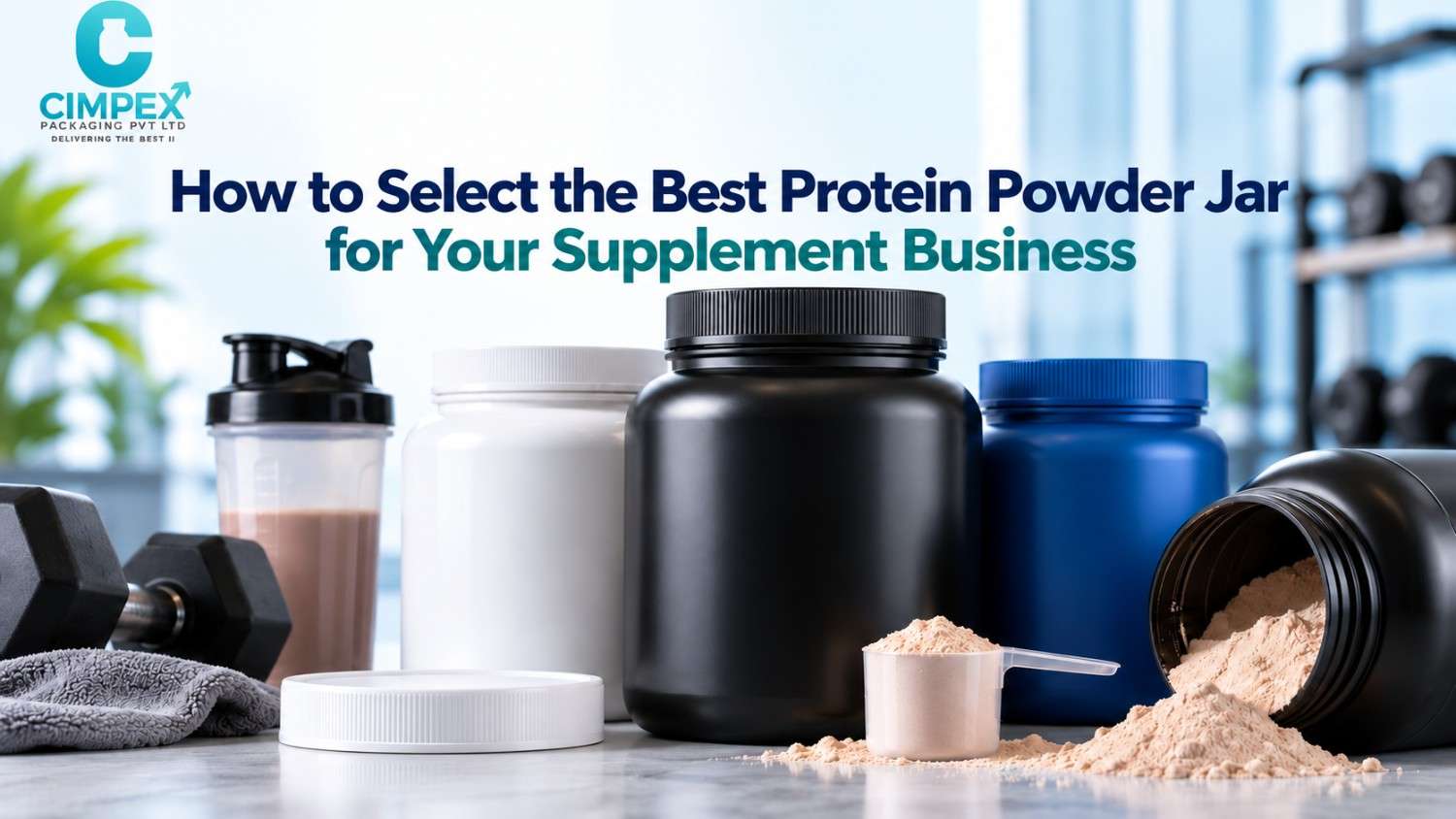
Why Packaging Matters for Protein Powder
Protein powder is hygroscopic, which means it absorbs moisture from the air. Once humidity gets in, the powder can clump, lose flow and develop quality problems long before its printed expiry date. Light and air exposure can also affect flavour and appearance. The jar is therefore the first line of protection, not just a container. Brands that treat packaging as an afterthought often discover the problem only after products have sat in warehouses and on retail shelves for several months. A supplement jar also works as a sales tool. Customers judge a brand by how the jar feels, how easily the lid turns and how well the scoop is stored. Poor jars produce complaints about cracked lids, loose seals and powder spilling during opening. A carefully chosen protein powder jar reduces these issues and supports a premium impression.Material Choices for Supplement Containers
HDPE and Why It Is Common
HDPE protein powder jars are widely used because high-density polyethylene offers good moisture resistance, impact strength and chemical stability for dry products. HDPE is lightweight compared with glass, which lowers freight cost and removes breakage risk. You can find a general description of the material in this reference on high-density polyethylene.Polypropylene for Rigid, Clear-Look Jars
Polypropylene is stiffer and can give a different look and feel. It is often selected for closures and for jars where rigidity or a specific appearance matters. Compatibility with the powder and the printing or labelling method should be confirmed with the manufacturer.Key Material Selection Points
- Moisture barrier: a dense wall helps protect hygroscopic powders over long storage.
- Opacity: opaque or coloured jars limit light exposure and can hide product level, which some brands prefer for a premium look.
- Weight and transport: lighter jars reduce shipping weight, though very thin walls may deform under stacking.
- Surface finish: a smooth surface supports clean labelling, sleeves and direct printing.
Choosing the Right Mouth Size and Shape
The mouth opening affects filling speed, scooping and customer comfort. Wide mouth protein powder containers allow a standard scoop to enter and leave without knocking powder over the rim. They also make filling faster because powder flows through a larger opening with less bridging. However, a very wide opening needs a well-fitting lid to preserve the seal. When comparing wide mouth protein powder containers, check that the lid thread, liner and neck finish are matched, since a wide neck that warps slightly can reduce sealing performance.Shape and Ergonomics
Round jars with straight sides are easy to fill and label. Slightly tapered bodies can be easier to grip, while square-shoulder designs maximise label area. Think about how the jar sits in a shipping carton and on a retail shelf before locking in the shape.Closures, Liners and Scoop Storage
Closure design decides whether a good jar stays good. Protein powder jars with screw caps are the standard format because they give repeatable opening, a reliable seal and a compact lid profile. A liner or induction seal under the cap adds a second barrier and shows the customer the product has not been opened. Consider these closure points:- Thread engagement that closes firmly without excessive turning.
- A liner compatible with dry powder, to reduce moisture entry.
- A tamper-evident feature, such as a shrink band or induction seal, if your brand requires it.
- Space to store a measuring scoop, either inside the powder or in a dedicated holder.
Plastic Supplement Jars for Different Product Types
Plastic supplement jars are not limited to whey protein. Pre-workout blends, creatine, mass gainers, collagen and plant-based powders all use similar jar formats, but each product has its own demands. Fine, dusty powders benefit from a tight liner. Heavy mass gainers need sturdy walls and a secure grip. Flavoured powders may need a jar that holds fragrance without contamination. When evaluating plastic supplement jars, think about the entire range you plan to launch. Using one jar family across several products simplifies inventory, label design and ordering, while still allowing a different colour or print for each variant.Comparing Jar Options at a Glance
The table below compares common jar approaches using qualitative factors only. Final selection should be confirmed with samples and your own product testing.| Factor | Wide Mouth HDPE Jar | Standard Neck PP Jar | Glass Jar |
| Moisture protection | Strong with a good liner | Strong with a good liner | Excellent barrier |
| Weight | Light | Light | Heavy |
| Breakage risk | Low | Low | Higher |
| Scoop access | Easy | Moderate | Easy |
| Transport cost | Lower | Lower | Higher |
| Best suited for | Everyday protein and supplement powders | Products needing stiffness or specific appearance | Premium positioning where weight is acceptable |
Working With a Manufacturer
Protein Powder Jar Manufacturer: What to Ask
A capable protein powder jar manufacturer should explain its resin grade, moulding process and quality checks without hesitation. Cimpex Packaging, based in Baddi, Himachal Pradesh, produces HDPE and PP jars and closures and offers customised sizes and designs; you can read more about the company on its about page. Ask for samples, request dimensional details and test the jars on your own filling line before approving production.Nutraceutical Jar Manufacturer Requirements
A dependable nutraceutical jar manufacturer understands that supplements are consumed products, so cleanliness and consistency matter. Confirm that the manufacturer controls raw material quality, keeps production areas clean and checks each batch for leaks and dimensional accuracy. Brands in this sector should also confirm which food-contact and supplement regulations apply to them before launch. When shortlisting a nutraceutical jar manufacturer, ask how it handles batch records and what it does when a quality issue is found.Bulk Sourcing Considerations
Bulk protein powder packaging jars need predictable lead times and consistent quality from the first batch to the last. A protein powder jar manufacturer that also supplies closures and scoops can simplify matching and ordering. Confirm minimum order quantities, tooling costs for custom shapes and whether the supplier can hold stock for repeat orders. Buyers of bulk protein powder packaging jars should also agree on approved samples and acceptance criteria in writing before production starts.Common Mistakes to Avoid
- Choosing a jar for looks and checking the seal afterwards.
- Using a lid or liner that was not tested with the actual powder.
- Ignoring scoop size and storage when selecting the neck diameter.
- Placing a large first order without approving a sample batch.
- Overlooking how protein powder packaging containers behave when stacked in cartons.
Protein Powder Packaging Containers: Planning Your Range
Protein powder packaging containers should be planned around your product range, retail channel and shipping method. Direct-to-consumer brands focus on strong walls and secure caps for parcel transport, while retail brands focus on shelf appearance and label area. If you plan to scale, compare bulk protein powder packaging jars early, because pricing, lead time and tooling ownership all change with volume. Think about future sizes too, since a jar family that scales up and down in a consistent style makes brand extension simpler.Conclusion
Selecting the right protein powder jar is a practical decision built on material, mouth size, closure and supplier reliability. HDPE protein powder jars with a wide mouth and a well-matched screw cap suit most powders, provided the liner and scoop space are planned from the start. Wide mouth protein powder containers simplify scooping and filling, but only when the lid seals properly. Test samples with your actual product, compare options honestly and avoid ordering in volume before approving a sample. If you are launching or expanding a supplement range, list your powder type, net weight, scoop size and closure requirements before requesting quotes. You can explore the jar range on the Cimpex Packaging website or contact the team for guidance based on your product and order volume.Frequently Asked Questions
HDPE is the most common material for a protein powder jar because it resists moisture, absorbs impact and stays light for shipping. Polypropylene is also used for closures and rigid designs. The best option depends on your powder, barrier needs and presentation, so test samples first.
Wide mouth jars are preferred because they allow easy scooping, faster filling and less spillage at the rim. The larger opening also helps powder flow without bridging. A well-fitted lid and liner remain important, since wider necks need good sealing to keep powder dry.
A liner or induction seal is strongly recommended because it adds a moisture barrier and shows that the jar has not been opened. The exact choice depends on your brand and filling line. Always test the liner with your actual powder before production.
Yes, many manufacturers supply custom jar sizes, colours and neck finishes for bulk orders. Custom shapes usually require mould development, so confirm minimum quantities, sampling steps and lead times early. Share your filling line and scoop details so the design fits your process.
Choose the size from your net powder weight, the product’s bulk density and the scoop you plan to include. Allow some headspace for filling and settling. Ask the supplier for exact capacities and neck specifications rather than relying on general size charts.
Plastic is usually more practical for supplements because it is light, shatter-resistant and economical to ship. Glass offers an excellent barrier and premium feel but adds weight and breakage risk. Most protein and supplement brands choose HDPE or PP jars with a good closure system.
Check resin quality, closure fit, quality testing practices, customisation options and production capacity. Request samples and confirm lead times in writing. A supplier that answers technical questions clearly and documents batch checks is generally the safer choice for consumable products.