


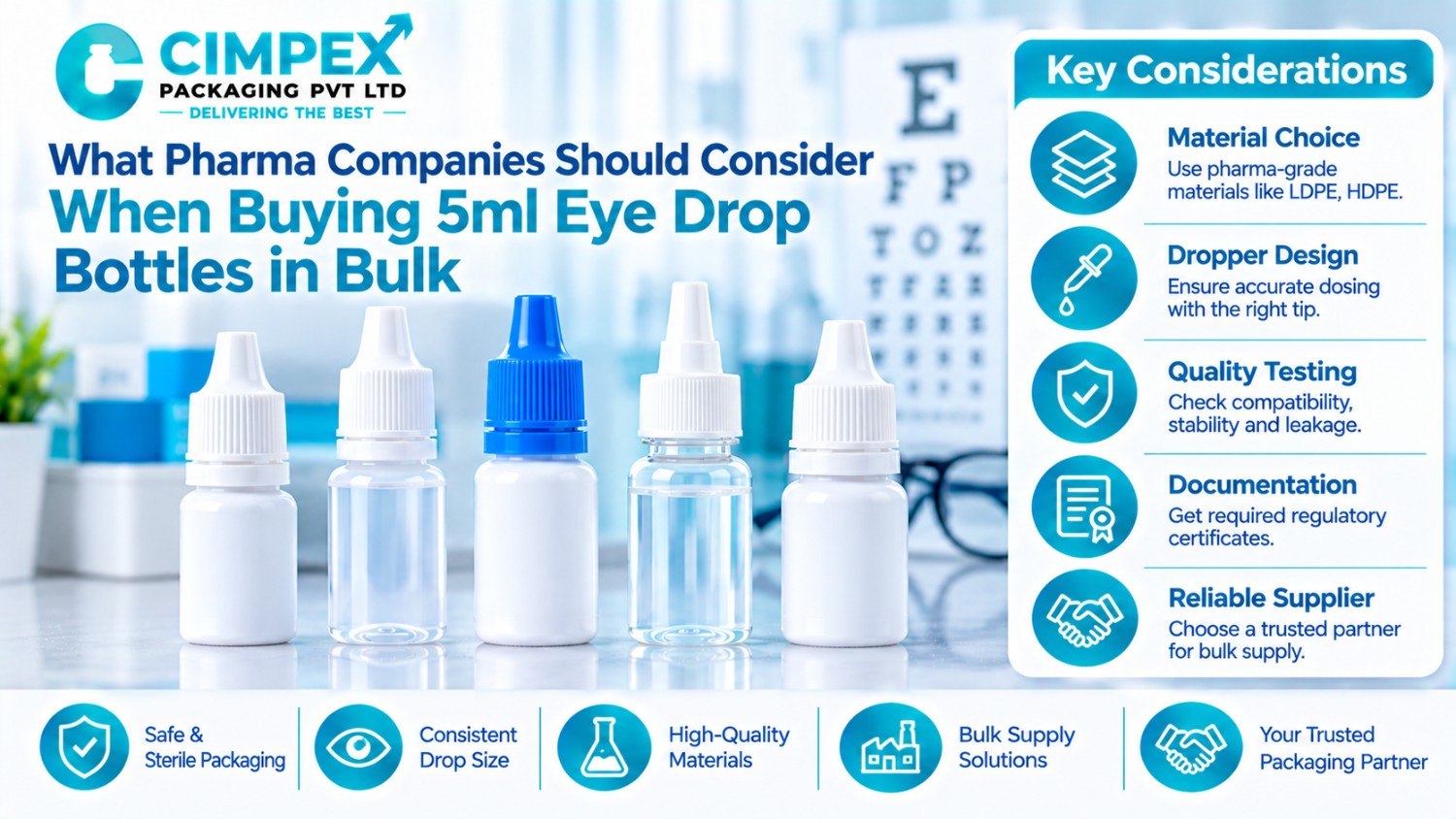
Why 5ml Eye Drop Bottles Deserve Closer Scrutiny
The 5ml format is a common presentation for ophthalmic solutions, particularly for prescription drops, trial packs and products where a smaller fill reduces waste after opening. Because 5ml eye drop bottles are so small, the ratio of plastic surface area to liquid is high. That makes material compatibility, sorption and extractables more important than they would be in a 100ml or 200ml bottle. A minor flaw in a dropper tip, a loose cap fit or an unsuitable resin can affect dose consistency or product stability across thousands of units. Eye drops also differ from oral liquids in one important respect: they are applied directly to a sensitive surface of the body. Pharma companies therefore expect tighter control over cleanliness, particulate matter and closure integrity in ophthalmic bottle packaging. When you buy 5ml eye drop bottles in bulk, you are really buying a repeatable manufacturing process, not just a moulded shape.Material Choice for Ophthalmic Containers
Most squeezable 5ml eye drop bottles are made from low-density polyethylene (LDPE) because it is soft enough for patients to dispense single drops with light pressure. High-density polyethylene (HDPE) and polypropylene (PP) are commonly used for caps and, in some designs, for the bottle body or dropper insert. A plastic eye drop bottle manufacturer should be able to explain which resin suits your formulation and why, rather than recommending the same material for every product.Questions to Ask About Resin
- Is the resin grade suitable for pharmaceutical contact, and can the supplier share traceability and regulatory documentation for each lot?
- How does the resin behave with your preservative system? Some preservatives can be absorbed by certain plastics over time.
- Does the product need protection against moisture loss, oxygen or light, and can the design (opaque, tinted or multilayer) support it?
- Will the bottle be sterilised, and by which method? Gamma radiation, ethylene oxide and aseptic filling each place different demands on the resin.
Compatibility and Stability Testing for 5ml Eye Drop Bottles
Compatibility is the factor most often rushed during packaging selection. Before committing to a bulk order of 5ml eye drop bottles, your formulation and quality teams should run compatibility and stability studies on the exact bottle, tip and cap combination that will be commercialised. Results from a similar-looking sample made by a different supplier are not a valid substitute. The usual areas of concern include:- Sorption of the active ingredient or preservative into the container wall
- Extractables and leachables migrating from the plastic into the solution
- Water vapour loss over time, which can concentrate the formulation
- Changes in pH, appearance or particulate content during storage
- Container-closure integrity after transport and temperature variation
Dropper Tip Design and Dose Consistency
Dose consistency is a core quality attribute of 5ml eye drop bottles. The dropper tip controls drop size, flow and the user experience. Drop size is influenced by tip geometry, orifice diameter, wall flexibility and the viscosity of the formulation. A tip that performs well with a thin, watery solution may behave quite differently with a viscous lubricant, so trial it with your actual product. An eye drop bottle with dropper cap should seat firmly, resist leakage during squeezing and allow the patient to dispense a drop without the tip touching the eye or eyelid. Ask suppliers how the tip is fitted, whether it is moulded in one piece with the bottle or inserted separately, and how consistently the orifice is produced from batch to batch. An eye drop bottle with dropper cap that works well in a laboratory trial but varies in production will create problems on the filling line and in the market.Closures, Tamper Evidence and Secondary Packaging
Ophthalmic products depend on a closure that is easy to open for patients yet clearly shows whether the pack has been opened. Many 5ml eye drop bottles use a screw cap with a tamper-evident band, while others rely on a separate neck seal or shrink band. Think about the complete ophthalmic bottle packaging system: bottle, tip, cap, any seal or band, label and carton. These parts must work together, and a change to one often affects the others. Elderly patients and people with limited hand strength are frequent users of eye drops, so cap torque and grip design deserve real attention. A cap that is difficult to open or that cracks under normal use will generate complaints regardless of how good the bottle itself is.Comparing Stock and Customised Bottles
Many companies start with standard 5ml eye drop bottles and move to a customised design as volumes grow. The right choice depends on your product, timeline and brand requirements. A plastic eye drop bottle manufacturer that offers both routes can help you move from one to the other without changing suppliers.| Factor | Standard stock bottle | Customised bottle |
| Development time | Shorter, because tooling already exists | Longer, because tooling and validation are needed |
| Initial investment | Lower | Higher, mainly for moulds |
| Brand differentiation | Limited to labels, cartons and colour options | Greater control over shape, tip and closure |
| Fit for formulation | Needs to be checked against an existing design | Can be developed around the product’s needs |
| Best suited for | New launches, trial batches, early-stage brands | Established products and long-term supply |
Manufacturing Quality and Documentation
A pharmaceutical eye drop bottle supplier is judged on process control as much as on the sample it sends you. Ask about the moulding environment, the cleanliness controls applied to packing and handling, the inspection steps used to catch black specks, flash and tip defects, and the way each lot is identified. Request a site audit where possible. Seeing the plant gives more reliable information than any brochure.Documents Worth Requesting
- Material certificates and resin traceability for each lot
- Certificates of analysis for finished bottles and caps
- Details of the quality management system and relevant manufacturing standards followed
- Change-control procedures, so that you are told before a resin, mould or process is altered
- Dimensional drawings and critical-to-quality parameters for the bottle, tip and cap
Why Sourcing from India Can Make Sense
Working with a 5ml eye drop bottle manufacturer in India can simplify several practical matters. Plant visits and audits are easier to arrange, technical discussions happen in compatible time zones, sample cycles are usually shorter, and freight to domestic fill-finish sites is more predictable. For companies exporting finished ophthalmic products, local sourcing can also help with cost planning. None of this removes the need for proper qualification, but it does make the qualification process faster to carry out. When comparing options, look at whether the 5ml eye drop bottle manufacturer in India you shortlist handles the whole job in-house or relies on third parties for caps, tips or printing. Fewer hand-offs generally mean clearer accountability if a quality issue arises.Bulk Procurement: What to Settle Before the Purchase Order
Bulk buying of 5ml eye drop bottles is where many otherwise careful projects run into trouble. Agree the details in writing before the first large order is released.- Minimum order quantities and batch sizes: Check that they match your filling schedule and avoid excess stock that ages in the warehouse.
- Lead times and safety stock: Ask how long repeat orders take and whether the supplier can hold buffer stock of critical components.
- Batch-to-batch consistency: Agree acceptance criteria and sampling plans for incoming inspection.
- Packing and transport: Confirm that cartons, liners and pallets protect the bottles from dust, crushing and moisture.
- Common mistake: Approving a pre-production sample and then accepting a different mould cavity, resin lot or tip in commercial supply without re-checking.
Finding the Right Eye Drop Bottle Packaging Solutions
The best eye drop bottle packaging solutions are those built around your product rather than around the supplier’s current stock. That might mean a particular tip, a tinted bottle for light-sensitive formulations, a cap with a specific torque profile or colour-coded closures for different strengths. Discuss these requirements early, because late changes to moulds and caps are expensive and slow. Good ophthalmic bottle packaging is designed around the formulation, the filling line and the patient together. It is also sensible to ask how a 5ml eye drop bottle manufacturer in India supports you after launch. Responsive technical support, clear complaint handling and a willingness to run joint investigations matter more than a small price difference per unit. A pharmaceutical eye drop bottle supplier that treats you as a long-term partner is far easier to work with when a deviation occurs.Conclusion
Buying 5ml eye drop bottles in bulk calls for the same discipline pharma companies apply to any primary packaging component. Start with material and compatibility, test the dropper tip with the real formulation, check that closures are easy to use and show tampering, and qualify the plastic eye drop bottle manufacturer on documentation, process control and change management. Settling order quantities, lead times and acceptance criteria early prevents most of the surprises that appear after the first large delivery. If you are planning a new ophthalmic launch or reviewing an existing supply chain, list your formulation requirements, closure preferences and expected volumes before requesting quotations. You can then compare eye drop bottle packaging solutions from different suppliers on equal terms. To discuss bottle options, an eye drop bottle with dropper cap suited to your formulation and bulk supply, you can contact the Cimpex Packaging team for guidance based on your product and production needs. For general background on the dosage form itself, see this overview of eye drops.Frequently Asked Questions
5ml eye drop bottles hold small volumes of ophthalmic solutions such as lubricating drops, antibiotic drops and prescription eye medicines. The small fill suits short treatment courses, trial packs and products that should not stay open for long. The bottle usually includes a dropper tip and a cap, often with a tamper-evident feature.
LDPE is widely used for 5ml eye drop bottles because it is soft and squeezable, allowing controlled single drops. HDPE or PP is often chosen for caps and some tip designs. The right material depends on your formulation, preservative system, sterilisation method and stability data, so test before you decide.
Look for a supplier that provides material traceability, batch documentation and a clear change-control process, and that allows plant audits. Request samples for compatibility and stability testing, and confirm that commercial lots will match the approved sample. Responsive technical support is as important as price.
Yes. Colour, bottle shape, tip design, cap style and closure features can usually be customised, although new moulds add cost and development time. Standard bottles with custom labels and cartons are a quicker route for early launches, while customised designs suit established products with steady volumes.
The dropper tip controls drop size, flow rate and how easily the patient can dose without touching the eye. Variations in orifice size or tip geometry can change dose consistency. Always test the tip with your actual formulation, particularly if the product is more viscous than water.
Tamper-evident features are widely used on ophthalmic packs because they show the patient whether the pack has been opened before use. Requirements depend on the product category and the market, so confirm them with your regulatory team. A band on the cap or a separate neck seal are common approaches.
Test compatibility between the formulation and the bottle, tip and cap, along with stability, container-closure integrity, drop size consistency and cap torque. Run these tests on samples made with production tooling, not prototypes, so the results reflect what you will actually receive in bulk.