


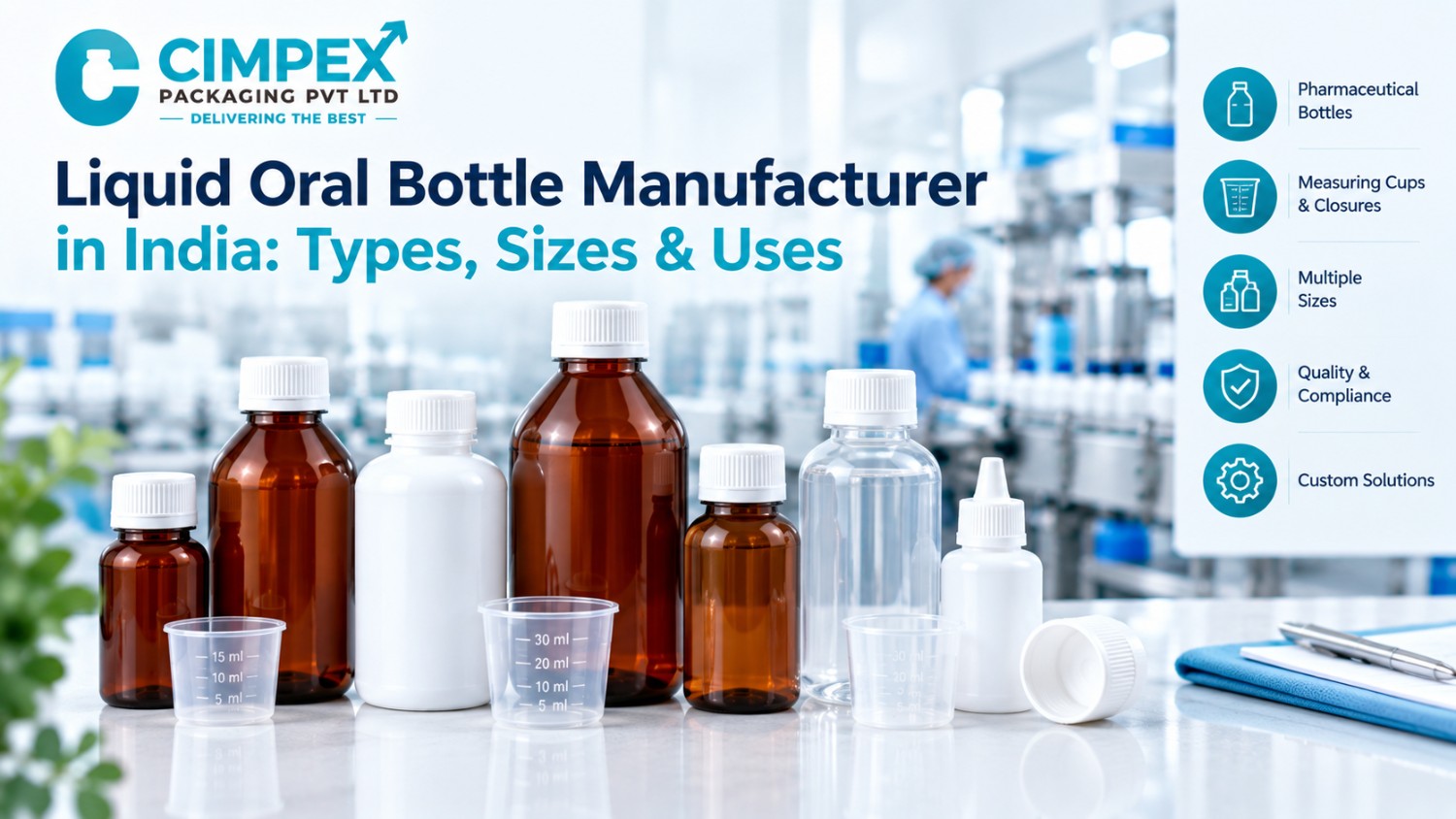
Cough syrups, paediatric suspensions, tonics and antacid liquids all rely on one unglamorous but critical component: the bottle that holds them from filling line to bedside. Choosing the right Liquid Oral Bottle Manufacturer in India affects dosing accuracy, shelf stability and patient safety just as much as the formulation itself. This guide covers the common bottle types, sizing conventions, material considerations and the practical checks worth doing before signing off on a supplier.
What a Liquid Oral Bottle Actually Needs to Do
For a liquid oral bottle manufacturer, the bottle is never just a container, it is part of the dosing system. It needs to protect the formulation from moisture and light where required, work reliably with a measuring cap or dropper, and hold its shape and seal through storage, transport and shelf display. For paediatric and geriatric products in particular, the closure also often needs to be child-resistant without becoming difficult for a caregiver to open correctly. Getting these details right isn’t only a manufacturing concern; it directly affects whether a patient receives the correct dose, whether a pharmacy can stock the product without frequent damage claims, and how the brand is perceived on a crowded shelf next to competing formulations.
Most oral liquid bottles used in the Indian pharmaceutical market are made from HDPE, chosen for its balance of moisture resistance, chemical compatibility and cost efficiency at scale. Amber or opaque HDPE variants are common where the active ingredient is light-sensitive. A dependable liquid oral bottle manufacturer will confirm resin grade and light-protection needs before finalising the material choice.
Liquid Oral Bottles: Common Types
Liquid oral bottles come in a few recognisable formats, each suited to a different dosing style.
- Round or oval HDPE bottles – The most common format for cough syrups, tonics and general liquid medicines, typically paired with a screw cap and measuring cup
- Dry syrup bottles – Wide-mouth bottles designed to hold powder that is reconstituted with water before dispensing, requiring a slightly larger neck opening than ready-to-use liquids
- Dropper bottles – Used for paediatric drops and concentrated formulations where dosing is measured in millilitres or drops rather than a full cap
- Amber or UV-protective bottles – Used when the active ingredient degrades under light exposure
Syrup Bottles: Sizes and Neck Finishes
Syrup bottles are typically available in a fairly standard set of volumes, though manufacturers can develop custom sizes for specific formulations. Common ranges include 30ml and 60ml for paediatric or short-course medications, 100ml and 150ml for standard adult courses, and 200ml or larger for extended-use tonics and health supplements. Neck finishes usually fall in the 24mm to 28mm range for standard syrup bottles, though dry syrup formats may use a wider opening to accommodate powder filling. A good liquid oral bottle manufacturer will also guide you on selecting the right neck finish for your formulation.
HDPE Syrup Bottles vs Glass
Many brands that once used glass for oral liquids have shifted to HDPE syrup bottles for a simple reason: weight and breakage risk. HDPE bottles are significantly lighter, which reduces shipping costs, and they don’t shatter if dropped during handling or transport a meaningful advantage in high-volume pharmacy and hospital settings. Glass still has a place where absolute chemical inertness or a premium shelf presentation matters, but for the vast majority of everyday cough syrups, paediatric suspensions and tonics manufactured at scale, plastic has become the practical default across the Indian pharmaceutical industry.
Liquid Oral Bottle Manufacturer: What to Check Before You Commit
Working with the right liquid oral bottle manufacturer matters more than most procurement teams initially expect, because small inconsistencies in wall thickness or cap fit can cause real dosing and shelf-life problems downstream. A few things worth confirming early:
- Whether the bottle’s material grade is pharma-compliant and sourced from approved resin suppliers
- Cap and liner compatibility, especially for child-resistant or tamper-evident closures
- Consistency in fill-line volume markings if the bottle is meant to be paired with a measuring cap
- Sample availability so your formulation team can test compatibility before committing to a bulk order
Oral Liquid Packaging Bottles: Material and Compliance Considerations
Oral liquid packaging bottles intended for pharmaceutical use typically need to meet a few baseline expectations beyond simple leak resistance:
- Moisture barrier performance strong enough to protect hygroscopic powders in dry syrup formats
- Compatibility with the active pharmaceutical ingredient and any preservatives in the formulation
- Consistent wall thickness to avoid weight variation across production batches
- Closures that meet applicable child-resistant or tamper-evident packaging norms where required
Pharmaceutical Liquid Bottles: HDPE vs PET Comparison
Procurement teams evaluating pharmaceutical liquid bottles often weigh HDPE against PET, since both are common in the oral liquid category. The table below outlines the practical differences.
Factor | HDPE Bottles | PET Bottles |
Clarity | Typically opaque or translucent | Naturally clear, better for visual inspection |
Moisture barrier | Strong | Moderate |
Chemical resistance | Excellent for most formulations | Good, but less resistant to certain solvents |
Cost at scale | Generally lower | Slightly higher for comparable volumes |
Common use | Cough syrups, tonics, dry syrups | Clear liquid formulations, some FMCG liquids |
Neither material is universally “better” the right choice depends on whether the formulation needs light protection, visual clarity, or a specific balance of cost and barrier performance. A capable liquid oral bottle manufacturer can advise on this trade-off based on your formulation and shelf requirements.
Manufacturing and Quality Control for Oral Liquid Bottles
Bottles intended for oral liquid pharmaceuticals go through a different level of scrutiny than general-purpose packaging, and understanding what that process involves helps procurement teams ask better questions during supplier evaluation. Wall thickness is checked across multiple points on the bottle body, since uneven thickness can create weak spots that lead to leakage or dimensional instability during storage. Neck finish tolerance is checked separately, since even a small variance here can cause a cap to seal inconsistently across a production batch a defect that often isn’t visible until bottles have already been filled and shipped. This is the kind of process detail a serious liquid oral bottle manufacturer should be able to walk you through in specifics.
Most established manufacturers also run drop testing and stress testing on new bottle designs before approving them for bulk production, simulating the kind of handling a bottle will realistically face between the filling line and the pharmacy shelf. For dry syrup bottles specifically, moisture ingress testing matters more than for ready-to-use liquids, since the whole point of the wide-mouth dry format is protecting a powder from humidity until the point of reconstitution.
Batch Consistency and Long-Term Supply
A single well-performing sample batch doesn’t guarantee that the tenth or the hundredth production run will perform identically. Resin sourcing, colourant batches, and even seasonal variations in production conditions can subtly shift bottle performance over time. Brands sourcing at scale should ask their liquid oral bottle manufacturer how they monitor consistency across batches, not just how the first approved sample performed this single question tends to separate suppliers who treat quality as an ongoing process from those who treat it as a one-time approval hurdle.
Regulatory and Labelling Considerations
Beyond the bottle and cap themselves, oral liquid packaging in India generally needs to align with labelling and child-safety expectations that apply to the product category. Paediatric formulations, in particular, are often expected to use closures that meet recognised child-resistant standards, and packaging teams should confirm this requirement applies to their specific product category before finalising a bottle-and-cap combination. It’s also worth checking that any printed or embossed dosage information on the bottle or accompanying measuring device stays legible and doesn’t wear off with routine handling, since regulators have specifically flagged unclear dosing markings as a source of accidental overdose in liquid medicines. Confirming these expectations directly with your liquid oral bottle manufacturer avoids compliance surprises later.
Liquid Medicine Bottles: Common Mistakes to Avoid
- Choosing a bottle size based purely on rounded volumes without checking actual fill-line accuracy against the measuring cap
- Overlooking cap torque testing, which can lead to leakage during transport if seals aren’t verified
- Assuming standard HDPE grades are automatically pharma-compliant without requesting material certification
- Skipping real-world sample testing with the actual formulation before finalising a bulk order
Conclusion
Selecting a liquid oral bottle manufacturer in India comes down to more than picking a size off a catalogue it means checking material compliance, cap compatibility, and fill-line accuracy against the actual formulation being packaged. Whether you’re developing a cough syrup, a dry syrup powder, or a paediatric drop formulation, the bottle and closure system need to work as reliably as the medicine inside them.
If your team is sourcing syrup bottles or dry syrup packaging for an upcoming launch, requesting material data sheets and physical samples upfront is the simplest way to avoid compatibility surprises once production scales up. Partnering with the right liquid oral bottle manufacturer from the outset makes this whole process considerably smoother.
For a broader look at how oral dosage forms are classified and administered, see Wikipedia’s overview of oral administration.
Frequently Asked Questions
HDPE is the most widely used material for liquid oral bottles because it offers strong moisture resistance, good chemical compatibility, and lower cost at scale compared with glass or PET, especially for syrups and tonics.
Common syrup bottle sizes range from 30ml and 60ml for paediatric doses to 100ml, 150ml and 200ml for standard adult courses, though manufacturers can develop custom volumes for specific formulations.
Yes, dry syrup bottles typically have a wider neck opening to allow powder filling before the pharmacist or patient adds water to reconstitute the formulation, unlike ready-to-use liquid bottles.
Yes, for light-sensitive formulations, amber or opaque bottles help slow down degradation caused by UV and visible light exposure. Clear or lightly tinted bottles are generally fine for formulations that are stable under normal light conditions, but it’s worth confirming this with the formulation team rather than assuming based on the product category alone.
Look for a liquid oral bottle manufacturer who can provide material certification, consistent fill-line accuracy, sample bottles for compatibility testing, and clear documentation on cap and closure compliance for pharmaceutical use.
Amber or opaque HDPE protects light-sensitive active ingredients from degradation, which helps maintain the formulation’s stability and effectiveness throughout its shelf life.
Standard syrup bottles commonly use 24mm to 28mm neck finishes, while dry syrup formats may use a wider opening to accommodate powder filling before reconstitution.
Yes, most manufacturers offer custom colours, embossing, and mould development for unique shapes, though custom moulds typically involve a longer lead time and higher minimum order quantity than standard catalogue bottles.