


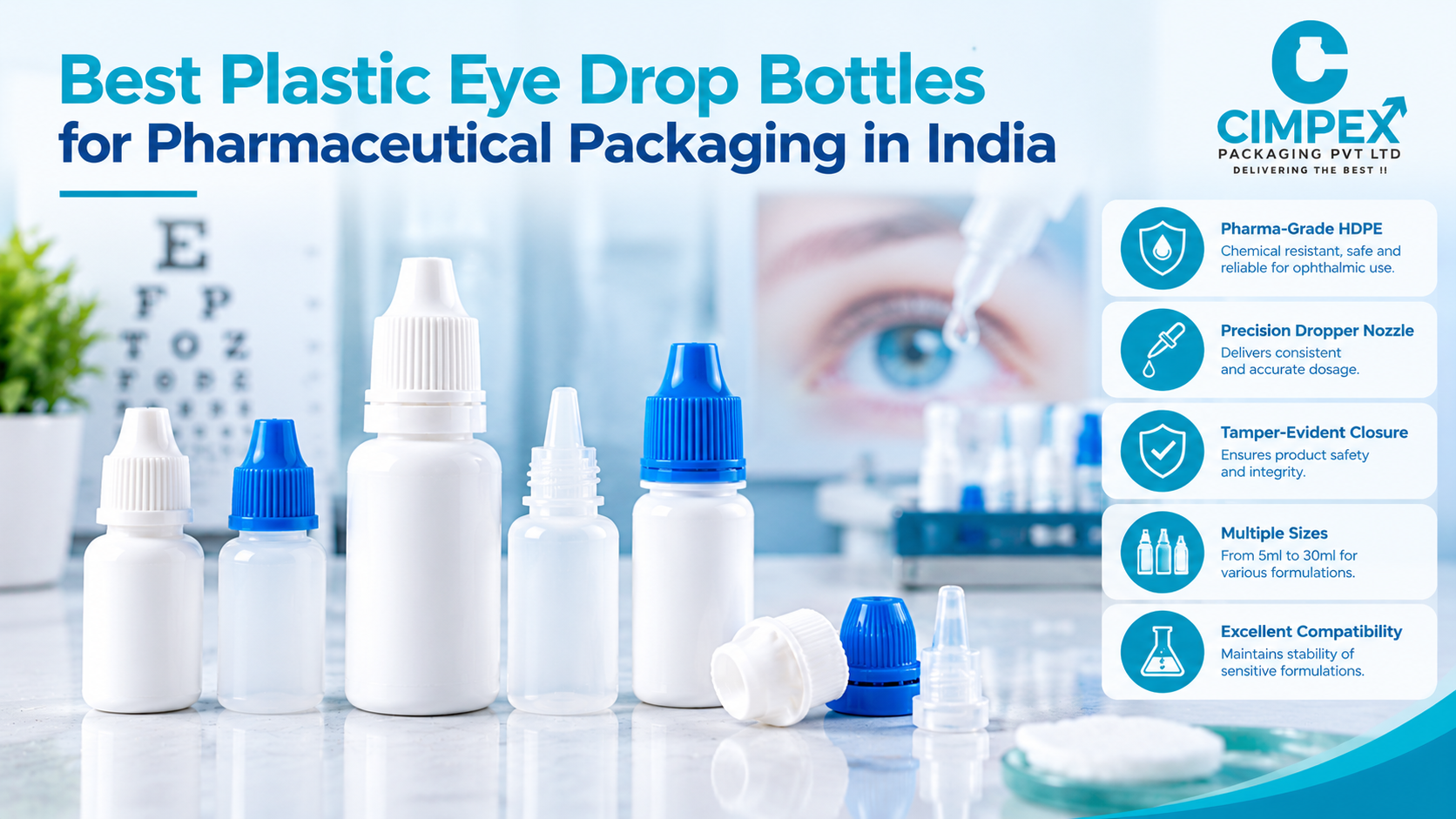
Selecting the right eye drop bottles is one of the more overlooked decisions in pharmaceutical product development, yet it directly affects sterility, dosage accuracy, and shelf life. This guide explains what these bottles are made from, which features separate a dependable supplier from an average one, the sizes commonly used across Indian pharma brands, and how to evaluate a manufacturing partner before placing a bulk order.
Why Choosing the Right Plastic Eye Drop Bottles Matters
Ophthalmic formulations are unusually sensitive to their packaging. Unlike a tablet bottle, where the container mainly needs to keep moisture out, eye drop bottles hold a sterile liquid that touches the eye directly, so every material and design choice carries a functional consequence. A poorly designed dropper tip can deliver an inconsistent drop size, which changes the actual dose a patient receives. A container that isn’t fully compatible with the formulation can interact with preservatives or active ingredients over time, altering potency before the product even reaches the pharmacy shelf.
For brands manufacturing in bulk, working with an established eye drop bottle manufacturer in India also has practical implications for cost and lead time. Domestic sourcing reduces shipping delays, allows for faster mould modifications, and makes it easier to run quality audits in person. Because eye drop bottles are produced at high volume for generic and branded ophthalmic lines alike, even a small design flaw multiplies quickly across a production run, making the initial supplier selection one of the more consequential decisions in the packaging process.
What Are Plastic Eye Drop Bottles Made From?
Most eye drop bottles used in the Indian pharmaceutical industry are manufactured from high-density polyethylene, commonly referred to as pharma-grade HDPE. This material is favoured because it combines chemical resistance with the flexibility needed for a squeeze-dispense mechanism, and it is widely recognised as suitable for pharmaceutical contact use. Background material on the polymer published by Wikipedia notes that high-density polyethylene is valued industrially for its strength-to-density ratio and resistance to many solvents, both properties that matter when a bottle must survive repeated squeezing without cracking.
HDPE eye drop bottles are typically produced through blow moulding, a process that shapes molten resin inside a two-part mould to create a consistent wall thickness. This consistency matters because thin spots can compromise the squeeze mechanism, while overly thick sections make the bottle harder to dispense drops from accurately. Reputable manufacturers also use pharma-grade HDPE that has been sourced from approved, traceable suppliers, since resin quality directly affects both clarity and long-term chemical stability of the container.
Key Features of High-Quality Pharmaceutical Eye Drop Bottles
Not every eye drop bottle on the market meets the standard required for pharmaceutical eye drop bottles intended for regulated markets. A handful of features consistently separate reliable packaging from packaging that creates problems during filling or after the product reaches the end user.
What to Look For
- A precision dropper nozzle that delivers a consistent, controlled drop size across the life of the bottle, rather than one that degrades after repeated use
- Verified chemical compatibility between the resin and the intended formulation, particularly for preservative systems and preserved multi-dose products
- A tamper-evident cap or seal that gives visible confirmation the bottle has not been opened before sale
- Consistent wall thickness and squeeze response, so dosing feels the same from the first use to the last
A precision dropper nozzle is particularly important in multi-dose ophthalmic packaging, where the same bottle may be used twice a day for weeks. If the nozzle geometry is inconsistent, patients either under-dose or waste product, and in some formulations this can affect therapeutic outcomes. Chemical compatibility testing, meanwhile, is not optional for serious suppliers; it typically involves exposing the resin to the actual formulation over an extended period to check for leaching, discolouration, or loss of potency.
Popular Plastic Eye Drop Bottle Sizes in India
Eye drop bottles for the Indian market are generally supplied in a narrow band of standard sizes, since most ophthalmic dosing regimens fall within a predictable volume range. The most common capacities include:
| Size | Typical Use Case | Common Cap Type |
| 5 ml | Single-course prescription drops | Tamper-evident dropper cap |
| 10 ml | Standard multi-dose formulations | Tamper-evident dropper cap |
| 15 ml | Extended-use or lubricant drops | Screw cap with dropper insert |
| 20 ml | Bulk or institutional supply | Screw cap with dropper insert |
Brands sourcing HDPE eye drop bottles for export markets sometimes require slightly different capacities to match regulatory or retail norms in the destination country, which is why manufacturers with flexible mould tooling are generally easier to work with over the long term.
How to Choose the Best Plastic Eye Drop Bottles for Pharma Products
Selecting eye drop bottles is not only about capacity. Formulators and packaging managers typically weigh several factors before finalising a supplier and a bottle design.
Evaluation Checklist
- Confirm the resin is genuinely pharma-grade HDPE and request batch traceability documentation
- Ask for chemical compatibility data relevant to your specific formulation, not just generic resin specifications
- Review dropper nozzle samples under real dispensing conditions before committing to a full production run
- Check whether the supplier can accommodate custom neck finishes or colours for brand differentiation
Because eye drop bottles are a direct-contact primary packaging component, most formulators also request a small compatibility trial before finalising an order, particularly for products with a long shelf-life claim. Skipping this step is one of the more common mistakes among newer brands, since two bottles that look identical can behave very differently with a given preservative system.
Manufacturing Quality Behind Reliable Eye Drop Bottles
The manufacturing process behind eye drop bottles has a direct bearing on product safety. A facility with strict quality control typically checks each production batch for wall thickness uniformity, leak resistance, neck dimension accuracy, and visual clarity before the bottles are released for filling.
Suppliers that specialise in pharmaceutical eye drop bottles usually maintain dedicated tooling for dropper inserts, since this component requires tighter tolerances than a standard bottle closure. Facilities that also handle general HDPE eye drop bottles for cosmetic or personal-care use sometimes apply the same tooling across both categories, which is why it is worth confirming that a supplier treats pharmaceutical-grade production as a distinct, more tightly controlled process rather than a variation of their standard line.
Customization Options for Pharmaceutical Eye Drop Bottles
Private-label and branded pharmaceutical companies frequently request customisation beyond the base bottle design. Typical options include coloured resin for light-sensitive formulations, custom cap colours for product-line differentiation, printed branding directly on the bottle, and neck finish variations to match existing filling line equipment.
Manufacturers offering flexible customisation for HDPE eye drop bottles are generally better positioned to support brands that operate multiple SKUs, since mould modifications can be applied across a shared base design rather than requiring an entirely new tool for every variant. This flexibility becomes especially valuable for companies expanding into ophthalmic lubricants, allergy drops, or antibiotic formulations that each carry slightly different packaging requirements.
Conclusion
Eye drop bottles may look like a small packaging decision on paper, but they influence dosing accuracy, formulation stability, and how a product is perceived on a pharmacy shelf. Choosing pharma-grade HDPE, verifying chemical compatibility, and working with a manufacturer that treats dropper nozzle precision seriously are the factors that separate dependable pharmaceutical eye drop bottles from packaging that creates problems later in the product’s life. For brands sourcing at scale, partnering with an experienced eye drop bottle manufacturer in India also simplifies quality audits, mould adjustments, and delivery timelines.
If you are developing or scaling an ophthalmic product line, evaluate your formulation’s compatibility requirements early and request compatibility data before committing to a bottle design. Explore Cimpex Packaging’s eye drop bottle range or get in touch with the team to discuss custom sizes and dropper configurations for your project.
Frequently Asked Questions
What material is best for eye drop bottles?
Pharma-grade HDPE is the standard material for eye drop bottles because it offers strong chemical resistance, consistent squeeze response, and compatibility with most ophthalmic preservative systems, making it suitable for direct-contact pharmaceutical packaging.
How do I know if a bottle is chemically compatible with my formulation?
Chemical compatibility is confirmed through extended exposure testing, where the actual formulation is stored in the bottle under real or accelerated conditions and checked periodically for leaching, discolouration, or potency loss over the intended shelf life.
What sizes of eye drop bottles are most common in India?
5 ml and 10 ml are the most widely used sizes for standard prescription and multi-dose ophthalmic products, while 15 ml and 20 ml are typically reserved for lubricant drops or institutional and bulk supply requirements.
Why does dropper nozzle design matter for dosing accuracy?
The dropper nozzle controls drop size and flow rate, so an inconsistent nozzle geometry can cause patients to receive more or less medication than intended, which matters most for potent or narrow-therapeutic-index formulations.
Can eye drop bottles be customised for branding?
Yes, most manufacturers offer coloured resin, custom cap colours, printed branding, and neck finish variations, allowing pharmaceutical brands to differentiate their products while keeping the core bottle design consistent across a product line.
Are HDPE eye drop bottles suitable for light-sensitive formulations?
Standard HDPE offers some inherent opacity, but formulations that are highly light-sensitive typically require additional coloured or opaque resin options, which most manufacturers can supply as a customisation rather than a standard stock item.
What should I check before placing a bulk order for pharmaceutical eye drop bottles?
Before a bulk order, confirm resin traceability, request compatibility data specific to your formulation, review physical dropper samples, and verify the manufacturer’s quality control process for wall thickness, leak resistance, and neck dimension accuracy.