


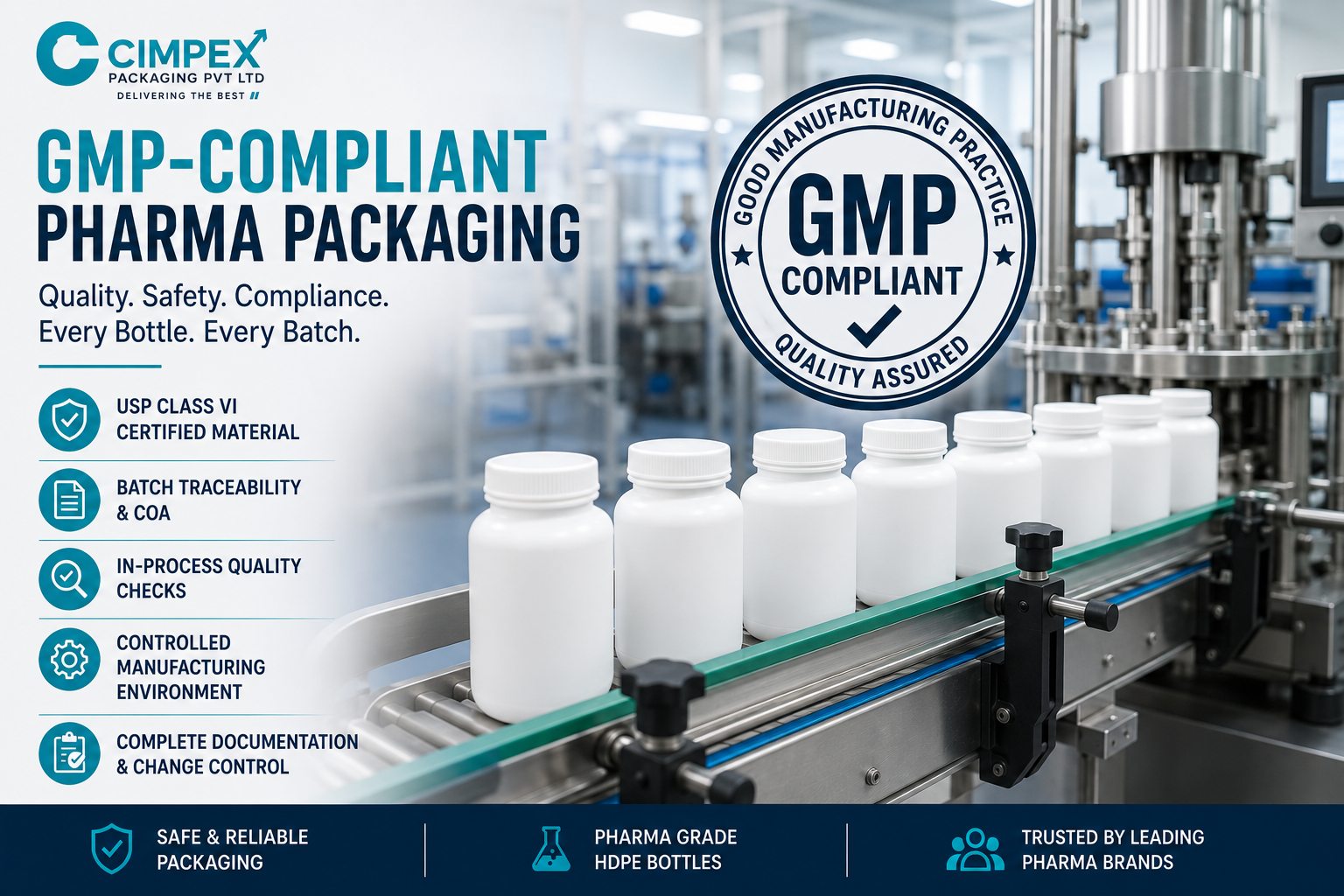
A single bad batch of bottles can cost a pharma brand more than money. It can cost a product recall, a regulatory notice, and years of customer trust built over decades. That is why GMP-compliant pharma packaging is not a checkbox on a purchase order; it is the last line of defense between your formulation and the patient who uses it.
Every year, more brands discover this the hard way, usually after a shipment fails a stability test or a closure leaks during transit. Before you place your next order, it helps to understand exactly what separates GMP-compliant pharma packaging from ordinary plastic containers. If you are sourcing pharmaceutical bottles for the first time, this guide walks through the practical checks brands must run before choosing GMP-compliant pharma packaging.
Why GMP-Compliant Pharma Packaging Matters
Good Manufacturing Practice standards exist because packaging is part of the drug delivery system, not an afterthought wrapped around it. When a bottle, cap, or liner fails to meet pharmaceutical-grade requirements, the consequences reach far beyond a damaged shipment, which is exactly why GMP-compliant pharma packaging carries so much weight in procurement decisions.
Impact on Product Safety
Packaging protects a formulation from moisture, oxygen, light, and contamination for the entire shelf life of the product. GMP-compliant pharma packaging is manufactured under controlled conditions that keep particulate matter, residual chemicals, and microbial contamination out of the container.
An unvalidated bottle can leach compounds into liquid formulations or fail to hold a proper seal, altering the medicine’s potency before it ever reaches the patient.
Regulatory Compliance
Regulators such as the CDSCO, USFDA, and WHO-GMP bodies expect full traceability of every packaging component used in a drug product. GMP-compliant pharma packaging comes with documented evidence, from raw material certificates to batch records, that regulators can audit at any point. Skipping this step can delay launches, trigger import alerts, and in serious cases, lead to product seizure.
Brand Reputation
Patients and pharmacists rarely see the manufacturing floor, but they do notice a cracked cap, a cloudy bottle, or a label that peels off in humid weather. Choosing GMP-compliant pharma packaging protects the brand equity a company has spent years building, one reliable shipment at a time.
Essential Things Brands Must Check Before Ordering
Ordering pharma packaging is not the same as ordering standard industrial containers. Before you commit to a supplier or a purchase order, run through these GMP-compliant pharma packaging checks in detail.
- Manufacturing certifications. Ask for current ISO 15378, WHO-GMP, or ISO 9001 certificates, and confirm they cover the specific product line you are ordering, not just the company as a whole.
- Raw material quality. Every resin, colorant, and additive used in the container should have a certificate of analysis. Pharma-grade polymers behave differently under heat and chemical exposure than commercial-grade plastics, and this difference shows up in long-term stability testing.
- USP-VI bottle compliance. A USP-VI bottle has passed biological reactivity testing that confirms it will not cause toxic or irritant reactions when in contact with a drug formulation. This is one of the most important checks for any liquid or solid oral dosage packaging, and suppliers should be able to provide test reports on request.
- Clean room manufacturing. Bottles and caps intended for pharma use should be molded, assembled, and packed in a controlled clean room environment. This limits airborne particles and cross-contamination during production, which is especially critical for sterile or semi-sterile products.
- Batch traceability. Every container should carry a batch number that links back to raw material lots, machine records, and quality checks. If a defect surfaces later, traceability lets a brand isolate the affected batch instead of recalling an entire product line.
- Food-grade materials. While pharma-grade is the higher standard, confirming that base resins also meet food-grade thresholds gives extra assurance for over-the-counter and nutraceutical products.
- Leak-proof testing. Every closure and bottle combination should undergo torque testing and leak testing under varying temperatures and pressures. A container that passes at room temperature can still fail during air transport or storage in a hot warehouse.
- Dimensional consistency. Neck finishes, wall thickness, and base dimensions need to stay consistent across every production run. Inconsistent dimensions cause capping line jams, seal failures, and labeling problems on high-speed filling equipment.
- Closure compatibility. Caps, droppers, and pumps must be tested together with the bottle they will ship with, not evaluated separately. Mismatched threading or torque specifications are one of the most common reasons GMP-compliant pharma packaging fails at the filling line.
- Sterility considerations. For injectables, ophthalmic products, and certain topical formulations, packaging may require gamma irradiation or other sterilization processes. Confirm the supplier’s sterilization capability and validation data before finalizing an order.
- Certificates of conformance, drug master file references, migration study data, and stability data should all be part of any standard GMP-compliant pharma packaging documentation package, not something you have to request repeatedly.
- Quality assurance. Ask how the supplier tests incoming raw materials, in-process production, and finished goods. A robust QA system typically includes AQL sampling, visual inspection, and dedicated sign-off before dispatch.
- Validation reports. Installation, operational, and performance qualification reports show that the manufacturing equipment itself has been validated for pharma production, giving confidence that the process is repeatable at scale.
Why Choosing the Right Pharma HDPE Bottle Supplier Matters
Selecting a pharma HDPE bottle supplier is as much about the relationship as it is about the product specification sheet, since consistent GMP-compliant pharma packaging depends on the partner behind it. A supplier who understands regulatory pressure will behave differently than one who only sees a purchase order.
- Manufacturing capabilities. Look for injection blow molding and extrusion blow molding capacity that matches your volume and bottle design, along with in-house tooling so design changes do not depend on a third party.
- Quality systems. A documented quality management system, internal audit schedule, and non-conformance process shows that quality is built into daily operations rather than checked only before shipment.
- Production capacity. A pharma HDPE bottle supplier should be able to scale with your demand without compromising consistency, especially during seasonal spikes or new product launches.
- Regulatory understanding. Suppliers who work with export-focused pharma brands tend to understand USFDA, EU-GMP, and CDSCO expectations more intuitively, which reduces friction during your own regulatory filings.
- Export readiness. If you sell internationally, confirm the supplier already exports to regulated markets, since this usually means their systems have survived third-party audits before.
- Technical support. A supplier who offers design input, mold modification, and troubleshooting support becomes a genuine partner rather than a transactional vendor.
Why Pharmaceutical Packaging in India is Becoming a Global Choice
Pharmaceutical packaging India has earned a reputation that now extends well beyond domestic supply chains, largely because more facilities now produce GMP-compliant pharma packaging to global specifications. Several factors are driving this shift.
Manufacturing standards across Indian pharma packaging facilities have risen sharply, with many plants now holding WHO-GMP, ISO, and USFDA-aligned certifications that match global benchmarks.
Export capabilities have matured alongside this, with Indian manufacturers routinely supplying regulated markets across the US, Europe, and Southeast Asia while meeting strict documentation requirements.
Investment in modern extrusion and injection blow molding technology has closed the gap with Western facilities, allowing tighter tolerances and more consistent output at scale.
Cost efficiency remains a genuine advantage, letting global brands access pharmaceutical packaging India at a lower landed cost without sacrificing compliance.
A large pool of skilled workforce, trained specifically in pharma-grade production and quality systems, supports this growth and keeps turnaround times competitive even for complex custom orders.
Conclusion
GMP-compliant pharma packaging is not a formality; it is a direct extension of product safety, regulatory standing, and brand trust. From verifying a USP-VI bottle to auditing a pharma HDPE bottle supplier’s clean room and documentation practices, every check in this guide protects your product long after it leaves the filling line.
Take time to evaluate certifications, request validation reports, and visit the facility whenever possible before finalizing an order. Whether you are sourcing locally or exploring pharmaceutical packaging India for export-scale production, the fundamentals of GMP packaging remain the same: verified materials, tested closures, and complete documentation.
Frequently Asked Questions
1. What makes packaging GMP-compliant pharma packaging rather than standard packaging?
GMP-compliant pharma packaging is made under controlled, validated conditions with documented raw materials, testing, and traceability that standard commercial packaging does not require.
2. Why does a USP-VI bottle matter for liquid formulations?
A USP-VI bottle has passed biological reactivity testing, confirming it will not react with or contaminate the drug formulation stored inside it over time.
3. How do I verify a pharma HDPE bottle supplier before ordering?
Request current certifications, validation reports, and batch traceability records, then confirm claims with a facility audit before placing a bulk order.
4. Is pharmaceutical packaging India suitable for export markets?
Yes, many Indian manufacturers hold WHO-GMP and USFDA-aligned certifications and already export GMP packaging to regulated global markets.
5. What documentation should accompany GMP packaging shipments?
Certificates of analysis, conformance certificates, validation reports, and migration study data should accompany every GMP-compliant pharma packaging shipment.
6. Can food-grade bottles be used for pharmaceutical products?
Food-grade materials alone are not sufficient; pharmaceutical products require pharma-grade, USP-VI tested packaging with additional validation and documentation.
7. How often should packaging suppliers be re-audited?
Most pharma brands re-audit suppliers annually or whenever there is a material, process, or facility change affecting GMP-compliant pharma packaging.
8. What is the biggest mistake brands make when ordering pharma packaging?
Choosing suppliers on price alone, without verifying certifications, validation data, or leak testing, often leads to costly failures later.