


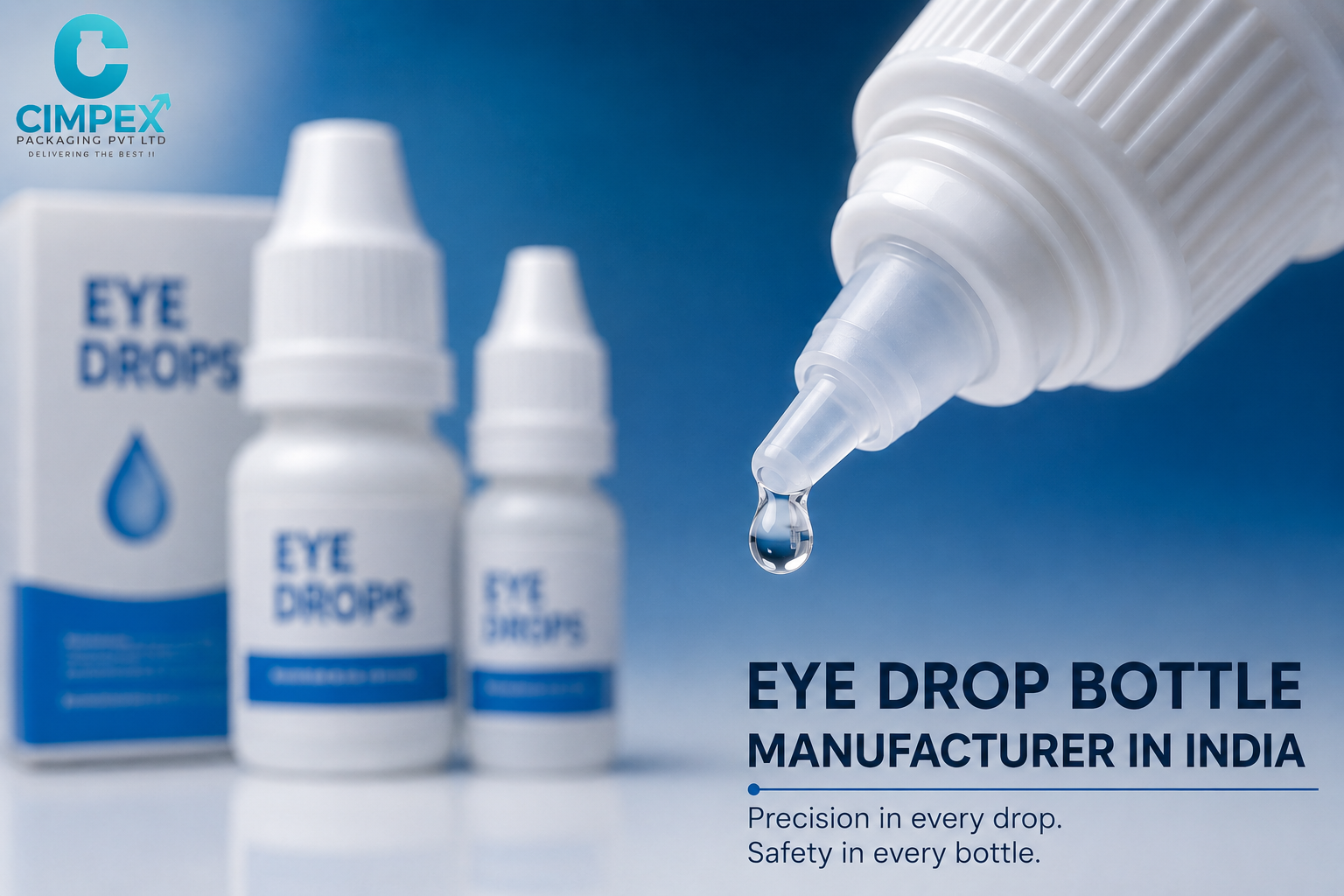
Ophthalmic packaging carries a different level of risk than almost any other bottle format a pharma brand will source. A mislabeled cream tube is a marketing headache; a compromised eye drop bottle can cause a genuine safety incident. That’s why choosing the right eye drop bottle manufacturer in India is one of the more consequential sourcing decisions a packaging or procurement team will make this year, and it deserves more scrutiny than a standard RFQ process usually gives it. This guide walks through the technical, regulatory and commercial criteria that separate a dependable eye drop bottle manufacturer in India from a supplier that will cause you problems six months into production, drawing on what brands typically ask for when they shortlist an eye drop bottle manufacturer in India for a new or reformulated product. If you haven’t reviewed the base eye drop bottles range yet, it’s worth starting there before you dig into supplier criteria.
Why Ophthalmic Packaging Demands a Different Standard
Eye drop bottles sit in direct, repeated contact with a mucous membrane. Every squeeze pushes formulation through a nozzle that must deliver a consistent, controlled drop — not a stream, not a dribble. Unlike a shampoo bottle or a general liquid pharma container, tolerances here are measured in microlitres, and the resin itself has to be inert enough that it doesn’t interact with preservatives, buffers or active ingredients over an 18- to 24-month shelf life. Any eye drop bottle manufacturer in India worth shortlisting will talk fluently about resin-formulation compatibility before you even ask, because they’ve seen what happens when a brand picks the wrong grade of plastic and gets stability-test failures at the six-month mark.
How Do You Evaluate an Eye Drop Bottle Manufacturer in India?
Reducing the decision to price per unit is the single most common mistake procurement teams make. A genuinely capable eye drop bottle manufacturer in India should be assessed against five criteria that map directly to patient safety and regulatory acceptance.
1. Sterility and Manufacturing Environment
Ask whether bottles are produced in a controlled or cleanroom-adjacent moulding environment, and whether the manufacturer can support either terminal sterilisation or aseptic filling downstream. Request particulate and bioburden data from a recent batch, not a generic claim of “sterile process.” A serious eye drop bottle manufacturer in India will have documented environmental monitoring and won’t hesitate to share it.
2. LDPE Squeezability and Drop Accuracy
Most reputable ophthalmic bottles use low-density polyethylene (LDPE) precisely because it flexes and rebounds predictably under finger pressure, unlike stiffer HDPE. This squeeze memory is what gives you a consistent single drop instead of an uncontrolled squirt. During supplier evaluation, ask for drop-weight consistency data across a sample batch — variation beyond a few percent points to inconsistent wall thickness or a poorly tuned nozzle orifice.
3. Nozzle and Dropper Tip Design
The nozzle geometry determines drop size, drop shape and resistance to dribbling after use. Look for a manufacturer offering multiple tip options (fine-tip, controlled-drop insert, anti-clog designs) rather than a single generic mould, since your formulation’s viscosity will dictate which tip performs best. This is also where compatibility with related formats matters — many ophthalmic brands eventually extend into nasal & ophthalmic vials for combination product lines, so it helps if your supplier already manufactures across both categories.
4. Tamper-Evidence and Closure Integrity
Regulatory bodies and retail channels alike expect a visible tamper-evident band or induction seal on ophthalmic packaging. Confirm neck-finish standardisation (commonly 13mm or similar small-neck formats for eye drop applications) so the cap-to-bottle fit is consistent batch after batch, and ask how the manufacturer verifies torque and seal integrity on the line rather than relying on spot checks alone.
5. GMP Compliance and Documentation
An eye drop bottle manufacturer in India serving pharma clients should operate under ISO 9001:2015 quality systems at minimum, use USP Class VI or equivalent food/pharma-grade resin, and be able to produce a Certificate of Analysis, migration-test data and material traceability records on request. If a supplier is cagey about documentation, treat that as a red flag regardless of how competitive their pricing looks.
A Practical Shortlisting Checklist
Before you send a purchase order to any eye drop bottle manufacturer in India, work through this list:
- Resin grade confirmed as LDPE (or the specific grade you’ve stability-tested against)
- USP Class VI or equivalent certification available on request
- Cleanroom or controlled-environment moulding, with monitoring records
- Drop-weight and drop-count consistency data from a live production batch
- Tamper-evident closure options matched to your neck finish
- ISO 9001:2015 or equivalent quality certification
- Minimum order quantities and lead times that match your production calendar
- Willingness to support a paid or sampled trial run before a full commercial order
Running through this checklist early avoids the costly scenario of qualifying a supplier on paper, only to discover during scale-up that their tooling can’t hold the tolerances your formulation needs.
What About Capacity and Size Options?
Eye drop bottles are typically sourced in 5ml and 10ml formats, with the choice driven by dosing regimen, preservative-free single-use considerations and cost per unit rather than manufacturing capability alone. A well-equipped eye drop bottle manufacturer in India should be able to produce both without requiring separate tooling investment from your side, and should be transparent about which size mould is already validated versus which would need a new development cycle. If your formulation is still evolving, it’s worth asking early rather than locking into a size that turns out to be the wrong fit for your dosing schedule.
Common Mistakes Brands Make When Sourcing
Even experienced procurement teams stumble on a handful of recurring issues when they select an eye drop bottle manufacturer in India for the first time. Watch for these before you finalise a contract:
- Treating the bottle as a commodity. Ophthalmic packaging is a functional part of the drug-delivery system, not a generic container. A cheaper bottle that delivers an inconsistent drop volume can undermine years of formulation work.
- Skipping a trial batch to save time. A short production delay upfront is far less costly than discovering a nozzle or seal issue after a full commercial run has already shipped.
- Not confirming resin lot traceability. If a batch fails a stability test months later, you need to be able to trace it back to the exact resin lot and moulding run — not just “sometime in Q2.”
- Overlooking scale-up capacity. A manufacturer that handles pilot volumes comfortably may not have the tooling redundancy to support a sudden demand spike; ask about backup moulds and multi-shift capacity early.
- Ignoring lead-time volatility. Resin pricing and import logistics can shift lead times; a dependable eye drop bottle manufacturer in India will flag likely delays proactively rather than leaving you to find out at the shipping stage.
Avoiding these mistakes usually comes down to one habit: asking for evidence rather than assurances at every stage of supplier evaluation.
Working With an Established Supplier vs. a New Vendor
There’s a real trade-off between chasing the lowest quoted price from an unfamiliar vendor and working with an eye drop bottle manufacturer in India that already has a track record with pharma-grade ophthalmic packaging. Cimpex Packaging, for instance, has already published a detailed breakdown of what goes into eye drop bottle manufacturer in India selection for leak-proof, pharma-grade output — worth reading alongside this guide if you want the engineering detail behind seal integrity and leak testing. For a broader view of how bottle manufacturing standards apply across pharma packaging generally, the pharma bottle manufacturer guide covers material selection and quality benchmarks that apply well beyond ophthalmic lines.
New vendors aren’t automatically a risk — many run excellent operations — but they should be able to answer every item on the checklist above without hesitation, and ideally offer a trial batch before you commit volume.
Questions to Ask During a Facility Visit or Audit
If you’re able to visit or audit a shortlisted eye drop bottle manufacturer in India, prioritise these questions over a general facility walkthrough:
- How do you validate drop-weight consistency across a production run, and how often?
- What’s your documented process for material traceability from resin lot to finished bottle?
- Can you show environmental monitoring records for the moulding area?
- What tamper-evidence options are compatible with our chosen neck finish?
- What’s your typical lead time from tooling approval to first commercial shipment?
Straight, specific answers to these questions tell you more about a manufacturer’s real capability than any brochure will.
Making the Right Choice
Choosing an eye drop bottle manufacturer in India isn’t a decision to rush through a standard procurement checklist. It sits closer to selecting a formulation partner than a generic packaging vendor, because the bottle itself is part of how the drug is delivered and dosed. Prioritise sterility evidence, LDPE material performance, nozzle engineering, tamper-evidence and documented GMP compliance over price alone, and treat any hesitation around sharing test data as a signal to look elsewhere. When you’re ready to move from evaluation to production, it’s worth reaching out directly to request eye-drop samples so you can run your own stability and drop-consistency checks before committing to volume.
Frequently Asked Questions
What certifications should an eye drop bottle manufacturer in India hold?
At minimum, ISO 9001:2015 quality certification and USP Class VI or equivalent resin compliance, plus documented GMP-aligned production practices.
Is LDPE always better than HDPE for eye drop bottles?
For squeeze-dispensed ophthalmic bottles, yes — LDPE’s flexibility gives more consistent, controllable drops than stiffer HDPE.
How do I know if a bottle is genuinely tamper-evident?
Look for a visible induction seal or perforated band that shows clear, irreversible damage once broken, verified by the manufacturer’s QC process.
What’s the typical minimum order quantity for eye drop bottles in India?
This varies by manufacturer and mould availability; always confirm MOQs and lead times before finalising a supplier.
Should I request a sample batch before placing a full order?
Yes — a trial run lets you verify drop weight, seal integrity and formulation compatibility before committing to volume production.
Can one manufacturer supply both 5ml and 10ml eye drop bottles?
Most established suppliers can, provided both sizes already have validated tooling; confirm this before finalising your specification.
Do eye drop bottles need separate sterility validation from the cap?
Yes — bottle, dropper insert and cap are typically validated together as a closure system, not as isolated components.